


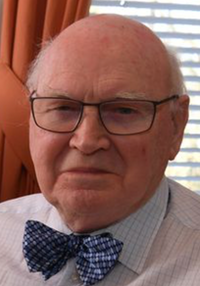


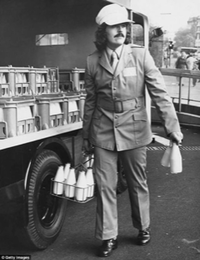


 FORMER Daily Express back bencher Len Gould has died at his home in Spain aged 73. He had been suffering from cancer.




 Lord Drone is saddened to announce that former Sunday Express literary editor Graham Ball died on Sunday, 4 May, in a London hospital after a fall at home. He was 69.


THE WORLD’S GREATEST ONLINE NEWSPAPER


Last night of the Daily Star in Manchester
HERE'S the result of another excursion into the dusty annals, this time by Mike Hughes who has found these pictures of the Daily Star’s last day in Ancoats, Manchester, in May 1989 before the paper transferred to London.
The Daily Star celebrated its 40th anniversary on 4 November, 2018.
Words and pictures by MIKE HUGHES

UPFRONT: Mike Hughes chooses the final Star Bird with Deputy Picture Editor Colin Gower

LAST OF THE MANY: Once there were 400 members of the NUJ chapel in Ancoats. Million-pound subs (well not far off) with their redundancy cheques. Back row on the right is Ken Hillman, deceased. Front from the left: Colin Wright (deceased) the best tit caption writer in the business; Huw Ash; Colin Gower (deceased) Deputy Picture Editor; Tony Callaghan; Mike Hughes; a.n.other; Simon Bygrave (deceased) son of Sunday Express Northern Editor, Howard.

SUBS AT WORK: Along with spikes and glue pots! Huw Ash on the Back Bench phone, Mike Hughes to his left, Middle Bench. On the left Mal Tattersall, who is still working on the paper in London; Colin Wright (centre) and Simon Bygrave. Downtable in the foreground. Shiv Sharma, still with us and living in Cheshire; Bill ? with goatee, long gone. Can’t remember guy in glasses on the right.

Daily Star staff: Caption to come

Mike Hughes sees off the final front page

Mike Hughes on the Backbench with Northern News Editor, Maurice Richards, (deceased)
And finally one from the Express in Manchester

IRON RULE: A steely Ted Hodgson views the newsroom with Alf Gregory to his left. Then, from left, Bob Cocksworth, Tony Fowler, Alex Stuttard beavering away of Page One and Mike Hughes. This pic dates from around 1971.
Victor Davis, doyen of showbiz writers

SIMPLY THE BEST: Victor Davis with photographers Harry Benson, left and Steve Wood in 2014
Victor Davis, former Showbusiness Editor of the Daily Express and the doyen of entertainment writers, died at his home in Notting Hill, London on 12 November, 2018.
He was 89.
ALAN FRAME writes:
For the doyen of Fleet St showbiz writers, Victor Davis cut a less than dashing figure. He would walk through Aitken House with his signature plastic carrier bag containing God knows what — there was speculation it contained vast piles of cash and shares certificates accumulated over the years thanks to his eye for wise investments.
But the slightly shambolic Victor, who died on November 12, aged 89 after a long illness, was greeted as a friend by the biggest names in film and theatre and his interviews with his pals were, quite simply, the best.
So good in fact that nine years ago he generously donated three decades of recorded interviews and his notebooks to Cardiff University School of Journalism. He indexed all the interviews; under B for instance were David Bowie, Richard Burton, Marlon Brando, Warren Beatty, Charles Bronson and Drew Barrymore.
When I was appointed features editor in 1981 I was blessed with the finest showbiz writers in newspapers: Victor, David Wigg, Judith Simons, Maureen Paton, James Murray and Ian Christie, all corralled by secretaries Hettie Myers and Esther Harrod. Victor was a joy to work with, a great professional with the best contacts book in Fleet Street. And he was proud of his Elephant and Castle roots, something he shared with his pal Michael Caine.
He began as a copy boy at the Express in 1945 moving to a reporter’s job at the weekly Streatham News in 1950 and then to the Daily Sketch in 1956; he was later night news editor of the Sketch and, simultaneously, The People (ah, the joys of the Saturday shift!)
From 1960 to 1962 he was a foreign corr for the Express, reporting the brutal events in the Congo. He was night news editor from 1962-5 and then in our New York bureau from 1965-7. In 1967 Victor was appointed show business editor before being lured to the Mail on Sunday in 1984 much to our collective disappointment.
He was also an accomplished novelist with four titles published by Gollancz, The Ghostmaker, Queens’ Ransom, Getting Away With It and Life Sentence.
Victor and I would lunch at Joe Allen (where else?) and he was immensely modest and unshowbizzy, the exact opposite of most of the people he interviewed. He was devoted to his wife, the lovely Janice, who died four years ago. Most recently he was looked after by carers at his home in Notting Hill.
Victor Davis was, quite simply, the best of that remarkable Golden Age we were so privileged to be part of.
Here’s a great piece Victor wrote for the Mail on Sunday in 2009
DICK DISMORE:
He belonged to a Golden Age, not just of Fleet Street but of showbiz reporting, when journalists such as Victor actually knew the people they wrote about and didn't just meet them in West End hotel rooms surrounded by PR ninnies. Vic was up there with Donald Zec and there is no higher praise.
TERRY MANNERS:
I didn't know Victor well but he was always so courteous and sincere in my dealings with him. As others have said he came from the days of the real interview ... and not the snatch phone call or cuttings fill-in of the staged PR meeting. Actually I could have read a lot more about him and it is such a shame we don't have some of his anecdotes on our beloved Daily Drone. Good to know that he has so many friends.
GEOFFREY LEVY:
Vic and the others really knew people, got stories. My main recollection of him, though, is when he was night news editor sitting behind that curious glass screen and bellowing in a huge voice at reporters demanding copy. Terrific journalist in all areas.
TOM BROWN:
A first-class journalist and, even more important, the best of colleagues. I owe him a lot for his help when I first arrived in London and for the way he kept me on the ball when he had a big showbiz story. And he made the heyday of Fleet Street fun.
GILL MARTIN:
He was a joy to work with, kind, generous and immensely entertaining. He’ll enjoy interviewing the heavenly bodies.
STEVE WOOD:
I miss Victor and Robin Leach [showbiz writer who died in August]. Both of them had fantastic lives and enriched mine so much. They were both pillars of strength for me, we live in sad times. They were so wonderful, they looked after me and I looked after them. I will continue to look up to them.
MAUREEN PATON
Lovely tributes here to a real one-off who inspired lots of us. Victor once told me how he got an exclusive with Charlie Chaplin because they came from the same desperately poor part of London and Charlie was so intrigued that he couldn't wait to reminisce. As Victor said in that inimitable rasp of his, "We were both born with the arse hanging out of our trousers.”
In Victor's case, the odds against him were stacked even higher since he was born with ankylosing spondylitis, hence the lifelong problems with his gait. That didn't stop him hitting the campaign trail with Martin Luther King, captured in a great photo — and the rest is celebrity history.
A hugely talented, clever and quick-witted man, yet never remotely grand about himself. I remember him sitting at his typewriter in the showbusiness office one day, staring into space and saying, "An intro, an intro, my kingdom for an intro...How about 'Once upon a time’?"
RODERICK GILCHRIST tribute in Mail On Sunday
The day I was drawn to Cummings

By TERRY MANNERS
Clearing out the loft the other day I came across an original cartoon by Express Political Cartoonist Michael Cummings who died in 1997.
I remembered he was a kind, unassuming man who worked for Punch for 30 years before joining the Express in 1949, leaving in 1990.
Michael Heseltine once said of him: “Being caricatured by Cummings was ‘Death by a thousand strokes … but at least I die laughing’.”
When I looked at the cartoon of an ugly politician seeing the reflection of an angel as he looked in the mirror, I remembered it was around the time of the Privacy Bill and the Commons debate about what should be revealed and published about people.
Then my mind wandered back to how I came to have the original artwork and I remembered that it was early one evening when the late, dapper Bobby Cocksworth, bless his woollen suits, and I were on the Backbench.
He was searching for some pictures to frame and hang in his old oast house that proudly displayed The Crusader weather vane on the roof.

“What I’d really like is something original Tel,” he said.
I had just walked past cartoonist Cummings, pictured right, fully suited and booted, sketching away on an art board.
“Let’s see if we can get you a Cummings,” I said. It was worth a try and so we marched up and announced our mission to the silver-haired man of humour who always looked so serious.
To our surprise he said: “Do you know, people never seem to ask me unless it is a subject that concerns them. Come with me, I’ll show you something.”
He marched us along to an 8ft steel filing cupboard, unlocked the doors and threw them open. There before us were around 200 neatly-piled old Cummings cartoons.
“Help yourself Terry,” he said, “I’m leaving soon and was wondering what to do with them all.”
I took one and Bobby got a box to take quite a few. I believe he made a gallery of them.
Coming down from the loft this week I thought I would look up Cummings on the internet.
So imagine my surprise when I opened a page from London’s Political Cartoonists’ Gallery to find his originals selling for around five hundred quid each.
Bobby and I should have taken a wheelbarrow to that cupboard.
In full: Paul Dacre’s speech to the Society of Editors

Sunday 4th November 2018
Ian, Ladies and Gentlemen,
It was 10 years ago this week that I made my last speech to the Society of Editors annual conference. And what a tumultuous — and, in many cases, distressing — decade it has been for all of us here tonight.
In those years, two newspapers have closed, the right-wing Daily Express and left-wing Daily Mirror have become corporate bed mates and national daily newspaper sales have halved — I repeat halved — down from just under 11 million copies a day to 5.4 million.
National Sunday newspapers have fared even worse, falling from 11.5 million to 4.8 million. Meanwhile, more than 200 local papers have closed.
And yet, we’re here still, still punching way above our weight. Still setting the news agenda for the broadcasters, who rarely miss a chance to denigrate our industry.
Yes, still here. Still causing trouble and controversy. Still infuriating politicians, mandarins, quangocrats, local authorities and, of course, the rich and powerful who, as we’ve recently seen, are still being aided and abetted by a judiciary that, sadly, doesn’t seem to understand the pure silliness of granting gagging injunctions in a digital age.
Two great issues, I would suggest, have dominated — tortured might a better word — the minds of our industry over the decade.
First, the internet. Relentlessly, its algorithms plunder our hard earned journalism and advertising. Relentlessly, we’re told how, in that hackneyed cliché du jour, it poses “an existential threat” to our industry.
Academics flounder as they attempt to define what constitutes news and journalism in a digital age while in the real world newspaper reporters carry on doing the real work of trying to tell the truth and sometimes dying for it.
The other great issue of the past decade has been the Leveson Inquiry, that massive misjudgement and over-reaction by a Prime Minister trying to save his skin after his insistence, against all advice, on taking a crooked, disgraced News of the World editor to No10 as his media adviser.
Today, it is not fanciful to suggest that Leveson, in which an entire industry was judged guilty and had to prove its innocence, was a calculated attempt by the Establishment to control the one sector of the media it couldn’t regulate either through licence or statutory body: a bloody-minded and occasionally profoundly irresponsible newspaper industry.
Nor is it fanciful to suggest this was pay-back time. Pay-back by a political class badly scalded in the expenses imbroglio. Pay-back by an increasingly politicised Whitehall constantly assailed by the Press for its incompetence and unaccountability.
And pay-back by a newly activist judiciary smarting over constant press attacks on their often controversial interpretations of the Human Rights Act prompting charges that judges, not Parliament, were creating a privacy law.
The greatest indictment of Leveson, whose remit the Prime Minister told the House would include broadcasting and social media, was that he devoted just 14 out of the 2,000 pages in his report to the internet.
Now, let’s not forget that one of Leveson’s proposals to deal with the press was to involve OFCOM, a crass idea that was rightly quickly rejected by the politicians.
But his most controversial recommendation was that a form of extortion be used to force us to sign up to what was effectively statutory regulation.
The notion that newspapers, which didn’t comply, would be forced to pay exemplary damages if they lost a libel action and faced paying the other side’s costs even if they won was, in retrospect, a preposterous inversion of justice and I never imagined I would live in a country where the Second Chamber would back such nonsense.
But the greatest indictment of Leveson, whose remit the Prime Minister told the House would include broadcasting and social media, was that he devoted just 14 out of the 2,000 pages in his report to the internet.
Now, it is truism that generals and politicians always fight the last war. So do judges…
Leveson, fixated by the Press, and like so many of his ilk, out of touch with the real world, seemed oblivious to the fact that the newspaper industry, which for centuries had played a significant part in our democratic process and was already subject to 50 bits of law affecting media freedom, was terminally ill.
Its very life blood was being sucked out by an utterly unregulated, defiantly anarchic, arrogantly unaccountable, awesomely ubiquitous digital monster which regarded itself as above the law, churned out fake news, tried to rig elections, invaded citizens’ privacy on a cosmic scale, provided succour to terrorists and paedophiles, devastated our high streets, and, oh yes, made billions but paid barely any taxes.
In his book, Breaking News, the former Guardian Editor, Alan Rusbridger, describes in homeric terms, his and his reporter Nick Davies’s role in exposing phone hacking which he declares was our industry’s Enron, our Volkswagen, our sub-prime crisis.
But is that fair?
I outlined the dangers of what I dubbed the “subsidariat”: that section of the media which seems to take great pride in being economically unviable — the vast BBC, the Guardian, and the Independent
Countless people didn’t lose their life savings because of the News of the World. Thousands didn’t die prematurely from diesel fumes because of the Sunday Mirror. And Britain didn’t suffer eight years of financial distress because of the Sun.
Now let’s be unequivocal: phone hacking, though restricted to only two newspaper groups, shamed our whole industry. It was disgusting, immoral and unethical.
But more than anything, phone hacking was illegal. It should have been dealt with forcibly by the police and the fact that it wasn’t is, I have always believed, far more worrying than the criminality itself.
But hacking, terrible as it was, was not a reason to jettison press freedom. Nor was it a reason to justify the drip, drip, drip denigration of the British Press, that is still so prevalent in the liberal media today.
I have referred before to my school English master’s loathing of one of my favourite authors, Graham Greene. “If Greene saw a lamp post”, he would declare, referring to the Catholic writer’s obsession with sin and fallen man, “he would only see the dog dirt at the base and not the illuminating light at the top.”
And today, one of the greatest problems we have in restoring trust is that when it comes to the mainstream Press, the liberal Brexit-hating media — and, let’s be frank, in their eyes, the Referendum result was further proof of the malignancy of euro-sceptic newspapers — only ever see the bottom of the lamp post and remain determinedly, and I would say self-interestedly, oblivious to the good newspapers do.
Now, giving the Hugh Cudlipp Lecture some years ago, I outlined the dangers of what I dubbed the “subsidariat”: that section of the media which seems to take great pride in being economically unviable — the vast BBC with its compulsory licence, the Guardian with its bottomless Scott Trust coffers, and the Independent with its ex-KGB boss’s billions.
Freed from the obligation of having to connect with enough consumers to turn a shilling, such media organisations lose contact with the real world, and have little idea how money works (and, indeed, are suspicious of profit). Often hijacked by ideologues, invariably from the Left, they almost always regard with contempt the mass-selling papers which need to appeal to large audiences in order to survive commercially.
Unedifyingly, it manages to combine rather cloying self-glorification and moral superiority with an almost visceral contempt of and disdain for the rest of the Press.
Today, with the contraction of print, that subsidariat is more powerful than ever.
And an exquisitely telling insight into its mindset — and its obsession with the bottom of Fleet Street’s lamp post — is provided by Alan Rusbridger’s just published memoir.
Now much of the book is a thoughtful, if somewhat prolix, analysis of the tectonic changes – some exciting, others deeply disturbing, that the internet is effecting on journalism.
But its real message, and how insidiously it drips through the pages, is that virtually every national newspaper in Britain is scurrilous, corrupt and amoral with one iridescent exception. Yes, you’ve guessed it … The Guardian.
Now Alan is a very gifted journalist with huge achievements to his name, achievements, incidentally that he’s not reluctant to dwell on. So how sad that the defining tone of this tome is sanctimony and self-justification.
Unedifyingly, it manages to combine rather cloying self-glorification and moral superiority with an almost visceral contempt of and disdain for the rest of the press.
A somewhat chilling lack of self-awareness fuses with a hyper-sensitivity to the flaws of others. Indeed, its sine qua non is that only Alan and the Guardian are capable of producing what he calls “worthwhile” journalism.
And before you say “play the ball, not the man”, you should know that this book contains some of the most unpleasant ad hominem attacks on individuals that I have ever read in a work about Fleet Street.
In it, the red tops have a business model based on invading people’s privacy and are beyond redemption.
It makes much of the author’s heroic courage in defeating Jonathan Aitken in a libel court while virtually ignoring the fact that it was relentless work by Peter Preston’s Guardian that broke the original story.
For the Mail’s journalism there is a sliver of begrudging respect, but the paper itself and I are beyond the pale.
But it saves its real venom for the Telegraph which, with its blurring of the boundaries between editorial and advertising, did, at one stage, behave deplorably, but I suspect for Alan its real sin is to be a quality paper that actually makes good profits.
Inevitably, Rupert Murdoch is the devil incarnate.
But what a pity that the book can’t summon the generosity to admit that The Times today is an excellent, highly respected, profitable serious paper. More pertinently, its subscription package seems to have cracked the internet conundrum, something The Guardian has so conspicuously failed to do.
But then the book is a masterclass in the art of sly omissions.
It makes much of the author’s heroic courage in defeating Jonathan Aitken in a libel court while virtually ignoring the fact that it was relentless work by Peter Preston’s Guardian that broke the original story.
It delights in letting us know that Preston anointed Alan as his successor but fails to reveal that the younger man then conspired to oust as Editor-in-Chief his former boss, a giant of our trade who, in 400-odd pages, gets scant mention, as does Kath Viner, Alan’s successor.
In the same mean-spiritedness, it fails to give a single mention to Roger Alton, one of the architects of the brilliantly innovative G2 supplement and editor for ten years of a courageous and creative Observer, the Guardian’s stablemate that punched way above its weight.
The Mail’s offence is that it had dared to criticise the Guardian’s recklessness in publishing such sensitive intelligence information in an age when ISIS and Russian spies were to murder citizens on the streets of Britain
It dwells at huge length on the Barclay brothers’ off-shore tax arrangements but, oh dear, only makes a glancing mention of the Guardian Group’s own use of tax avoidance schemes in tiny 6 point type in notes at the back of the book.
It glories in the Pulitzer Prize given to the Guardian for its Edward Snowden coverage but fails to mention in the text that it was shared with the Washington Post.
And, of course, while it devotes pages to justifying publishing the Snowden revelations, fails to mention that the Prime Minister, the Home Secretary, the leader of the Liberal Democrat party, a former Labour Foreign Secretary, a Minister of State for Security and the Deputy National Security Adviser all publicly deplored the damage that this had done to Britain’s intelligence capabilities.
Indeed, it is over Snowden that the book is most agitated with the Mail, a paper that, incidentally, loudly opposed extraordinary rendition, Guantanamo Bay and the Iraq War.
The Mail’s offence is that it had dared to criticise the Guardian’s recklessness in publishing such sensitive intelligence information in an age when ISIS and Russian spies were to murder citizens on the streets of Britain.
What Alan – who betrays flashes of paranoia in this book – seems incapable of understanding, is that the Mail took a principled stand, one that had the support of our leader writers, our top commentators Max Hastings and Stephen Glover and, incidentally, of other editors and columnists.
It had nothing to do with a vendetta against the Guardian.
Yet what seems to have shocked the Guardian most is that the Mail broke the Fleet Street convention that dog doesn’t bite dog. Ye Gods! This from a paper that over nearly two decades rarely missed a day to flick vitriol over my and other Fleet Street papers.
And, as its balance sheets dripped with red ink, was it perhaps hubris that persuaded Guardian Online, with no plausible business or journalistic model, to expand so recklessly and expensively into America
But, of course, this memoir’s greatest omission is that it ignores one of the most fascinating media stories of the past few years: how a dramatic putsch by an utterly demoralised staff, deposed an incoming Scott Trust Chairman after the once-profitable Guardian had been reduced to an economic basket case, by vanity, hubris and eye-watering financial misjudgement.
That Chairman, of course, was Alan but in his book he is eerily silent on all this. Nor does he begin to explain why, at the very time when, to use his own words, “printed newspapers were on a perilous slide to eventual oblivion”, the Guardian took the economically insane decision to move into lavish state-of-the-art offices – complete with specially designed bespoke desks – and to buy expensive new presses when a diminishing newspaper industry was awash with cheap, spare, rentable, printing capacity.
Was the reason for the latter, perhaps, that the Guardian, piqued at the Independent stealing a march on it by becoming Britain’s so called first quality tabloid, had to go one better with the slightly larger size Berliner?
And, as its balance sheets dripped with red ink, was it perhaps hubris that persuaded Guardian Online, with no plausible business or journalistic model, to expand so recklessly and expensively into America, a country already awash with great liberal papers and media outlets?
The result of this madness quickly became all too apparent. Hundreds of millions of pounds down the plug hole! Countless brilliant journalists made redundant! And those Berliner presses? Ignominiously ditched after a few years as the paper was forced to reduce its size in order to rent cheaper printing!
So there you are! What a cautionary saga! And what a flesh and blood rendition of the belief – so endemic at the BBC and in much of the British public sector – that money grows on trees.
And this cuts to the quick of the dangers of a subsidariat that is out of touch with the real world and its financial exigencies.
It’s the country’s worst kept secret that the Guardian is the in-house newspaper of the BBC, that subsidised behemoth
How can a newspaper, that has shown such profligacy, be editorially objective about the financial activities of the City or the State, or the NHS or local authorities?
How, when it has been so financially feckless itself, can it call for ever more state spending or question a government’s need to balance the nation’s books?
These are serious questions.
It’s the country’s worst kept secret that the Guardian is the in-house newspaper of the BBC, that subsidised behemoth.
If the Corporation, Britain’s main news provider and its thousands of journalists – far more than employed by Fleet Street – hold the same financially irresponsible views as its in-house crib sheet, then Britain has a huge problem if it is ever going to return to economic solvency.
No, this sad tragi-comedy should be a text book case for journalism schools on how not to do things. It should be a primer on the dangers of merging Church and State, Editorial and Managerial, in newspapers and of allowing an Editor who will always want to expand the journalism to also have the powers of a Chief Executive who should always be responsible for controlling costs.
The two roles are mutually incompatible and I would suggest that a pusillanimous, weak and naïve Scott Trust should never have allowed such a conflict of interest or one man to hold such power.
But, of course, none of this will figure in journalism courses. The mainly left-wing Professors of Journalism – is there, by the way, a more ludicrous subject for academic study – will order box loads of this book to demonstrate to their students how appalling Fleet Street is.
Meanwhile, they’ll continue to churn out graduates for non-existent jobs which is why so many idealistic youngsters end up disillusioned and working in public relations, leaving us with a Britain where there are now more PRs than journalists – another depressing and insidious contribution to the democratic deficit.
And today, my heart bleeds for those dedicated young journalists who were lucky enough to get jobs, yet are being denied, by our industry’s belt tightening, the opportunities I enjoyed.
I’m proud of editing a paper for 26 years, that didn’t hack phones, kept rigid boundaries between Editorial and Advertising, and, with a brilliant management team, made billions in profits
Which makes me realise how very lucky I’ve been. You know I’ve had a fabulously privileged life in journalism. Yes technology has transformed our industry but to my dying day, I shall remember the pots of bubbling lead, the clatter of linotype machines and the printers’ ink-stained fingers as I watched my first news story being set on the stone in the bowels of the Manchester Daily Express in the seventies when the paper sold 3½ million copies.
I cut my journalistic teeth in Belfast at the height of the troubles. I spent six glorious years as a Washington and New York correspondent. I have dined at top tables on both sides of the Atlantic, had a front row seat at some great moments in history and worked with some of the most brilliant journalists of my generation.
So sorry Alan, I’m proud of having worked all my life in Fleet Street as did my father before me.
I’m proud of editing a paper for 26 years, that didn’t hack phones, kept rigid boundaries between Editorial and Advertising, and, with a brilliant management team, made billions in profits enabling me to employ superb journalists, commission costly investigations and launch new products like Metro and Mail Online, creating countless new jobs for journalists.
I’m proud of having worked for the Rothermere family who, while often disagreeing with my views, granted me that inestimable gift – the freedom to edit without interference – thus giving the lie to Alan’s repeated claim that, apart from the Guardian, newspapers are used by ruthless proprietors who dictate editorial policy for their own ends.
I’m proud of the way the Mail has held power to account, leading the charge against greedy bankers and the Sir Shifties of this world. I’m proud of the way that the Mail operated without fear or favour and was often as critical of Tory as Labour politicians.
I‘m inordinately proud of the Mail’s countless great campaigns: Dignity for the Elderly… Stephen Lawrence… Plastic bags… MRSA … Sepsis… Prostate cancer… Omagh bomb victims… Iraqi translators… Guantanamo Bay inmates… Liverpool Care Pathway… Fixed odds betting machines… Marine A… and many, many, many more that prove you don’t need to make a loss to produce worthy journalism.
I’m also proud of the rest of Fleet Street.
I’m proud of the red tops, the Mirror’s rumbustious campaigns and its loyalty to Labour and the Sun’s anarchic, bad-mannered irreverence for the Establishment
Yes, the Telegraph made mistakes but it’s still a fine paper with brave investigations and some of the best commentators in the business.
I am also proud that The Times is now such a first-rate paper and, incidentally, the Wall Street Journal is immeasurably better since Murdoch paid through the nose to acquire it.
And, yes, I’m proud of the Guardian which, when Alan was a fully engaged editor rather than a visionary business strategist, was a great paper and is still a great and important paper as its new editor – if I may be politically incorrect – struggles manfully, to restore economic coherence.
And I’m proud of the red tops, the Mirror’s rumbustious campaigns and its loyalty to Labour and the Sun’s anarchic, bad-mannered irreverence for the Establishment.
Both papers employ gifted, highly creative and empathetic journalists who possess considerable skills – skills that should not be allowed to die out – in using words, pictures and headlines to tell complex stories in simple eye-grabbing ways.
And, as I speak in what still is a great newspaper city, I’m hugely proud of the regional and local press whose journalists heroically work long hours for risibly little reward as they fight against the odds to represent their communities. The closest to their readerships of all Britain’s media, they are the coutry’s true popular newspapers.
Yes, all these papers sometimes make mistakes but they are sustained by dedicated journalists who care deeply about getting it right and doing good by their readers whatever the zealots of Hacked Off and the Priapic Three – Messrs Coogan, Grant and Mosley – might say.
And we should remember that Fleet Street papers have always been owned by rogues. Beaverbrook was a pretty rackety character but Arthur Christiansen’s Daily Express was the world’s best middle-brow paper.
Conrad Black was a shyster but his Telegraph was a first class paper. Robert Maxwell was an egregious conman but his Mirror was still a force for good.
And Alexander Lebedev once worked for the KGB but his Independent was a fine paper and an elegant voice for liberal values.
And, of course, there are rogues on the other side. One-time Maxwell henchman, Roy Greenslade, Editor of the Mirror during the “Spot the Ball” game scam, has reinvented himself as a Professor of Journalism. That such a mountebank teaches ethics is a satirical commentary on academia that the combined talents of Jonathan Swift and Evelyn Waugh would struggle to do justice to.
Now I’m not defending these proprietors but I am saying that they are a fact of life – as is the fact that Britain, unlike other countries, still has a richly pluralistic and immensely vigorous free press.
Above all, we should never forget that press freedom means the freedom to get it right and the freedom to get it wrong. The freedom to do great things and, in the exhaustion of producing 100 page papers six days a week, the freedom to make mistakes.
I don’t agree with the Guardian’s decision to publish Snowden who now skulks in the murderous kleptocracy that is Russia. The man was a traitor who should have been arrested and not sanctified.
Equally, the Mail should have the freedom to write a headline about judges being the enemy of the people, the title of an Ibsen play
But I also passionately believe the Guardian must have the freedom to carry such stories. The sadness is that Alan cannot see that The Sun should have the freedom to write about the love lives of celebrities and footballers who are of such interest to their readers. In order to act in the public interest, they need to interest the public.
Equally, the Mail should have the freedom to write a headline about judges being the enemy of the people. The title of an Ibsen play, it was meant to be a distillation of the views of Brexit MPs angry that the High Court was becoming involved in the political process. In retrospect, the Telegraph’s banner “The Judges Versus The People” was, to coin a phrase, a tad more judicious.
But what the hell. The point needed to be made. And it was the Mail’s headline, not the almost identical Telegraph one, that, as happens so often, put an issue on the agenda.
And I just hope that their Lordships’ bruised feelings are soothed by the £60,000 pay rise they are in line to collect.
But then one of the growing themes of our age is the ever widening gap between the liberalism of the West’s ruling classes and the social conservatism of the majority of the voters.
One aspect of this in the British media has been the emergence of the Metropolitan Echo Chamber, dominated by the broadcasters, in which politicians, commentators, reporters and opinion formers – all gloriously liberal and politically correct – talk only to each other. The result is often a febrile, hyperbolic, hysterical journalism of a kind that is unprecedented in my lifetime and I worry that it is not a healthy development.
In Westminster, the Echo Chamber has decided that Brexit is doomed and that the terminally incompetent Theresa May is toast which is why the last rites are gleefully read over her every other day. Earlier this month, she was pronounced so dead that I’m surprised she was able to get up in the morning.
She is, of course, still here and will, I predict, take the Tories into the next election.
But the problem with the Echo Chamber is that its inhabitants increasingly haven’t a clue what real people in Britain, outside the M25, are thinking.
I do believe that the necessity for newspapers to be commercially viable sharpens their understanding of their readers’ anxieties and aspirations.
I’ll tell you what those people aren’t talking about. They aren’t obsessing about the “Me Too” movement or Transgender rights or equal pay for BBC women journalists. And they do actually rather like Mrs May whom they think is a decent woman trying to do her best in very difficult circumstances.
It is, of course, because the inhabitants of the Echo Chamber only talk to each other, that the Referendum result came as such a seismic shock to them unlike Britain’s popular newspapers which, I suggest, because they have to live in the real world, are much closer to their readers’ thinking.
And if I am right about this growing gap between the rulers and the ruled, there will be increasing opportunities for Britain’s popular press – speaking, as it does, for a majority that is disenfranchised by the values of the political class and the BBC.
And while I don’t go as far as James Murdoch in saying that “The only reliable, durable and perpetual guarantor of independence is profit”, I do believe that the necessity for newspapers to be commercially viable sharpens their understanding of their readers’ anxieties and aspirations. And for the damage that subsidy can inflict, look no further than the sorry state of a French press that is dependent on government hand-outs.
So, yes, there are signs of hope and, if you’ll forgive the presumption, I’ll look into my crystal ball and make four quick predictions for you…
ONE: The BBC subsidariat will diminish in power as the streaming giants undermine the licence fee. And because nature abhors a vacuum, a right-of-centre TV network will one day take root in this country.
TWO: The internet giants will be regulated and, after all, why shouldn’t the juggernauts have the same responsibilities as newspapers? But the ultimate solution – as with the oil barons in the last century – is to break them up. Their monopolistic power is too great and that fundamental human characteristic – the need for privacy against the industrial scale theft of our data – will reassert itself.
THREE: There will be a turning away from algorithm created news in favour of authentic, regulated, curated journalism, both online and in print, that is created by brilliant minds that love pictures, headlines and words and possess extraordinary empathy with their readers.
FOUR: Newspapers will have a longer future than the Jeremiahs predict which is why I worry that there is a danger that repeated morbid predictions of our death will become self-fulfilling.
Of one thing I am absolutely certain: man’s hunger for news, information, analysis and, yes, sensation and gossip, is as old as time itself.
So there. I’ve stuck my neck out and, indeed, with the Guardian, put it on the block.
Well, frankly, my dears, I don’t give a damn.
What I do care about is the future of newspapers and how we improve our image when so many self-interested people seem determined to bang nails into the collective coffin that is Britain’s free press.
And is it now too much to hope that our industry – ALL of us – pull together to improve that image and, yes, confess that we make mistakes but also do much good which, more often than not, shines a light from the top of the lamp post and makes the world a better place.
