


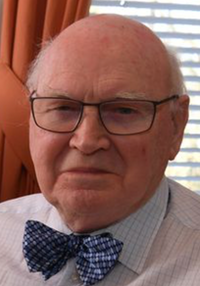


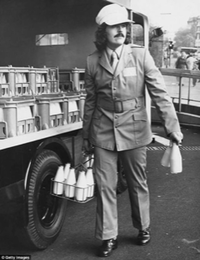


 FORMER Daily Express back bencher Len Gould has died at his home in Spain aged 73. He had been suffering from cancer.




 Lord Drone is saddened to announce that former Sunday Express literary editor Graham Ball died on Sunday, 4 May, in a London hospital after a fall at home. He was 69.


THE WORLD’S GREATEST ONLINE NEWSPAPER
Hyphen cuts a dash in 1966

By JOHN ‘HYPHEN’ FOX-CLINCH, Former Expressman
NOW here’s an oddity — three Express veterans, none older than 22 years of age in 1966. This picture recently emerged from the Hyphen archives. It shows yours truly receiving a small gift to mark my departure from my first subbing job at the Folkestone Herald and Gazette for the sophistication of the Worcester and Hereford Evening News.
But who are the guys on the left and right of the picture? The chap on the right left Fleet Street to make his fortune in Singapore, Hong Kong and, more recently, what sounds like a very happy and comfortable retirement in Thailand. Yes, none other than Nigel Lilburn.
When we met again at the Express, Nigel declared he had borrowed a book from me and would like to return it. And he duly did. The title? The ABC Book of Teach yourself Journalism — not sure it did us a lot of good...
On the left is, of course, production editor Bob Smith who I can reveal was heavily into Georgie Fame and the Blue Flames at the time — as well as girls, obviously.
Subsequently I worked with a couple of other Expressmen on the Bristol papers, subbing for Eric Price on the Western Daily Press with Roger Watkins who, so far as I can recall, later became a district reporter in Monmouth.
I was in Gloucestershire by then covering some of the Fred and Rosemary West killings (although at the time we didn’t know it was them). And I still have the press pass for the first flight of Concorde 002 from Filton to Fairford. I then spent a few weeks, on and off, at the end of Fairford runway waiting for it to crash.
Later on I moved to feature subbing on the Bristol Evening Post when Bill Wheeler was, I think, subbing on the WDP.
Then to Ancoats in Manchester in the early 1970s where I found Roger Watkins comfortably ensconced feature subbing.
Just a couple of stories from the Northern Lubianka. Initially, I worked on the art desk for Bob Staton whose greatest drinking pal was the head printer, Reg … ? One night after a good skinful, Bob collapsed in the urinal and threw up. Reg packed him off home in a taxi. The next day, Bob arrived at the office to be greeted by his drinking pal who said: “I’ve got something for you” and produced Bob’s unwashed false teeth from his pocket. Bob said: “Thank God, I wondered where they were,” and slammed them straight into his mouth.
The second, more-widely known tale, relates to the ever-stressed Tony Fowler who was night editing when one of his key aides fell down the stairs on the way to the stone and broke his arm. When told the news, Tony put his head in his hands and complained, “Why does everything happen to me?”
I left the Express in London 27 years ago but still display proudly, on the wall behind my computer, the splendid John Fox-Clinch Hyphen cartoon which art director Tim Holder drew and framed to mark my departure. He is sadly missed and was one of the nicest, most empathetic people I met in Fleet Street.
All the best to everyone.
Hyphen
PS So far as I know, it was Ted Dickinson who gave me my nickname soon after I started news subbing for the Sunday Express, courtesy of chief sub Terry Manners. Apparently, Ted asked someone to pass a story to that “hyphen” fellow.
RORY CLEMENTS writes: I’m pretty sure that the bloke standing next to Nigel Lilburn is a chap named Doug Wythe. He became editor of the East Kent Mercury when my wonderful first editor, Dick Jenkins, died while visiting Betteshanger Colliery. Haven’t seen Doug in almost 50 years but I have a feeling that he is also now deceased.
ALAN FRAME reports: Sorry to be a bit Prodnosian but Hyphen’s Manchester memories need a little rejigging. The Great Denture Debacle involved not the kindly and cerebral Art Editor Bob Staton but Claude Lescure, the Production Editor.
Poor Claude lost his gnashers after his customary post-midnight session in the Press Club by which time Bob would have been tucked up in leafy Bramhall where his neighbours included Brian Redhead, then Northern Editor of the Grauniad.
Staton and Lescure were rather different characters to say the least: Bob was an Oxford graduate and still had the air of scholarship. Claude could have been straight from central casting as a bit part spiv in a ‘50s black and white film. Shiny double breasted suits and sleeked back hair.
They were part of a brilliant team at the Manchester office in the 60s which included, in my three years there, Ted Hodgson, Tony Fowler, Norman Luck, Jim Davies and many other future Fleet Street stars. Very happy days … especially for Claude when his teeth were restored to smiling duty.
BOB CUMMINGS reports: The head printer's name you were looking for would have been pipe-smoking Jim Ford whose son, Glynn became an MEP. A prodigious pint drinker if ever there was one.
*****
After reading the above comments, JOHN FOX-CLINCH responds:
If it was later in the Seventies it would have been Brian Diggle whose office was based in The Land 'O Cakes although the false teeth story sounds more like big Jim.
It’s great that my earlier article and picture stirred some memories from the ‘60s and ‘70s, even if some don’t quite match mine. In particular, Alan Frame remembers my Bob Staton story as one that applied to Claude Lescure.
Claude was on the back bench when arrived in Ancoats Street — not a particularly tall guy with a black moustache and quite affable. I didn’t know him well but was told he started out as a messenger boy and worked his way up. Was he the guy who lost his false teeth in a gent’s urinal? It’s not the way I remember it although after further thought I now realise that Bob’s drinking buddy was not the head printer but the boss of the process department. That makes sense because Bob and Reg worked closely producing all the pictures and art work. They were, I think, both then in their fifties — Reg was average build with whitish hair and a wicked sense of humour. And I have a memory of him telling the false teeth story while Bob laughed sheepishly. A false memory? Who knows, certainly not me.
The art desk in those days was not about page design but processing art work and, aside from a desk of three subs, there were at least three full-time artists on duty every night to work their magic on the pictures, including moving footballs to make the action pictures more exciting — a practice no longer allowed.
As a Cambridge University graduate, Bob was a quiet, cultured sort of guy but he was also a discreet toper, hence he and Reg would leave the office together most nights. He used to organise a party annually at his house for close friends and colleagues and their wives, hosted by his elegant wife. But we were told not to mention it in the office as he didn’t want too many people to expect invitations.
Two other colleagues of note on the desk were Paul Buttle who became well known after he joined The Sun and earned several mentions in Private Eye. He was replaced by Tom Dobney who is in the Guinness Book of Records as the world’s youngest bomber pilot after lying about his age. He joined the RAF in 1940, aged 15, trained in Canada and later flew heavy bombers over Germany. He would also tell me about his adventures as a mercenary in the Congo - he led a full life, for sure.
Later, I moved to features and worked with the late Roy Eaves, a guy with a particularly interesting domestic life. His wife thought he worked a five-day week and we were under strict instructions to say he was unavailable on the Stone, should his wife call when he wasn’t there. I think that story can be told now without fear of upsetting anyone in his family. He had a knack for making daft pronouncements — and I seem to recall that Roger Watkins had a collection of what he called Eavesdroppings.
Night life in Manchester back then was amazing, probably at least 30 places you could go for an all-night drink including the Crusader club at the back of our building although that was probably as popular with Post Office workers as us. The Desert in Ancoats was a favourite place to drink during breaks, its greatest asset was a particularly well stacked and friendly blonde barmaid whose name I cannot recall.
One other point of interest. When I first arrived in Manchester, our house purchase fell through. So I spent a week or so dossing down with Roger Wood who was working at the Daily Mirror. He was a great headline writer and went on to become one of Hugh Cudlipp’s young lions at the Mirror in London. He is probably best known for his time on The Sun. When I last heard from him a few years ago, he was happily retired in northern Spain.
Anyway, back in 1973, I didn’t want to overstay my welcome with Roger, who lived in Bury, so I found another place to rest my head — the Unit 4 Sauna behind Manchester Cathedral. That turned out to be a homosexual paradise but if you slept with your back to the wall, nobody bothered you. Perhaps they just didn’t fancy me, although I do remember a high profile Daily Express writer trying it on one morning. He didn’t recognise me and I never told anyone — until now. No names, no pack drill.
The sauna had a social area and somewhere to get food, usually beans on toast when I got in after my shift at about 3.30 in the morning — and by the time I woke up and had some food it was often dark again. I met some interesting characters in there including the Black Prince, a multiple club owner and reputed gangster who would pop in for lunch. It was cheap and convenient and I slept there three nights a week for a couple of months, driving home to my family in Kendal in the Lake District on the fourth night. We rented a farmhouse up there while waiting for our alternative house to become available.
OK, that will do for a bit - except for the reference by Rory Clements to Doug Wythe. Yes, it was him in the picture. He fell out with Folkestone Herald editor Rob Wallace and moved on - so I am really pleased that he later became an editor himself.
Continued Page 93
Gomer widow’s plight — DailyTelegraph report


A grieving widow has been unable to collect her husband’s body for eight months while the NHS “strings out” an investigation into his death.
Barry Gomer, a former Fleet Street photographer, died in A&E after nine hours with “no treatment” at the height of the Covid second wave.
He now lies frozen in a hospital mortuary, unable to be laid to rest because the trust refuses to acknowledge that negligence may have played a role, his wife has said.
She accuses the Royal Devon and Exeter of a “lack of morality and basic humanity” and of putting “emotional pressure” on her to accept a death certificate recording death by natural causes, which would allow his body to be released.
Married for more than 40 years, she is now in limbo, unable to hold a funeral, access his bank accounts or wind up his affairs.
A press photographer for decades who photographed Princess Diana’s landmine campaign, Gorbachev and countless wars, Mr Gomer was diagnosed with a suspected blood clot upon admission to the Royal Devon and Exeter Hospital in January.
Despite the diagnosis and suffering from shortness of breath, it is alleged that he was left untreated for hours while the department dealt with a surge of Covid patients.
On two occasions, a nurse was sent to get heparin, a clot-busting drug, but “got sidetracked and never returned,” according to Marthe Gomer.
Mr Gomer collapsed and died of a massive pulmonary embolism while searching the hospital for food, having allegedly been given nothing to eat or drink all day. He was 71 and had recently retired.

Mrs Gomer believes her husband “fell by the wayside” because he did not have Covid and “didn’t make a fuss”.
“I have to live with the fact that Barry, being Barry, sat there like a gentleman waiting his turn,” she told The Sunday Telegraph.
A former journalist on the Daily Express, Mrs Gomer was barred from accompanying her husband into hospital due to NHS Covid rules.
“I can guarantee that had I gone in with Barry, within five minutes of being given a diagnosis of a blood clot he would have been hooked up in the triage ward. That’s where my guilt comes into it.”
The couple spoke on the phone several times throughout January 25, with the last call only a few minutes before Mr Gomer collapsed.
“He was very despondent and low, said he hadn’t had anything to eat or drink all day.
“He said he was going in search of some food and would call me when he was eventually hooked up on the ward.
“I said 'do you want me to kick off' [with the hospital], but he said 'no, no, don’t worry, I’ll talk to you later'.
“That was the last time we spoke.”
Mrs Gomer said that doctors at the trust have subsequently conceded to her that had her husband had better treatment, he might have lived.
A death certificate recording “death by natural causes” was issued by the coroner the following morning.
Mrs Gomer has refused to accept it, saying it was issued on the basis of a cursory and incomplete explanation of the death by the hospital.
She is demanding a certificate stating death by natural causes but with an addendum acknowledging the allegations of inadequate treatment, which could then ease the path to a full inquest.
However, this is subject to an investigation by the hospital, which shows no signs of ending, despite a spokesman indicating months ago that it was days away from completion.

She alleges that the trust has placed moral pressure on her to accept the simplified death certificate – including no reference to poor treatment – so that she can remove her husband from the hospital mortuary.
"The RD&E NHS Trust are fully aware of the pressure they are putting me under. And given how long they have strung this out for it has to be deliberate,” she said.
“There's no doubt, there is subtle pressure from the hospital for me to accept that certificate.
“They have said to me that Barry has been in there longer than anyone else, that it's not dignified for him to be there.
“It makes you feel so awful – this is someone I lived with for 40 years.
“I could have Barry home and have a funeral immediately, but to do so I have to accept the death certificate, so it's a stalemate.”
As a press photographer, Mr Gomer travelled the world, covering revolutions, royalty and major sporting events.
He was briefly taken hostage by the UDA (Ulster Defence Association) in Northern Ireland, would routinely follow the Royal Family on skiing trips to Klosters, was present for the Somali refugee crisis and the opening of the first McDonald’s in Moscow in 1990.
One of his final Fleet Street jobs was accompanying Princess Diana on her iconic landmine campaign to Angola shortly before her death.
“He always got the picture,” said Mrs Gomer. “But he got it because he was diplomatic, he wasn’t a pushy person.”
Mrs Gomer now believes her husband’s quiet nature may have cost him his life, and the chance of a long and happy retirement together.
Nine people who tested positive for Covid were admitted to the Royal Devon and Exeter on the day Mr Gomer died, out of 2,931 across the UK.
However, from subsequent discussions with doctors, she has learnt that A&E had dealt with dozens of patients showing signs of possible Covid that day.
“On reflection, I do think that had Barry shown a positive Covid result his treatment would have begun there and then,” she said.
Julie Glynn, from Glynn’s Solicitors, who is representing the widow in a possible action against the hospital, said: “What may have been a delay in treating Barry is being compounded by what appears to be an inordinate delay in concluding the investigation.
“Almost seven months down the line in what should be a straightforward investigation involving 10 hours in A&E.
“This is causing Mrs Gomer a great deal of distress.”
A spokesman for the Royal Devon and Exeter NHS Foundation Trust said: “Our senior clinicians involved in the case have met Mrs Gomer twice to discuss Mr Gomer’s care and address her concerns and, at her request, we have also reviewed the care provided to Mr Gomer and have shared these findings in writing on a number of occasions.
“We are continuing to work with Mrs Gomer to respond to her concerns and extend our deepest sympathies for her loss.”
