


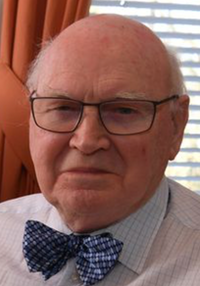


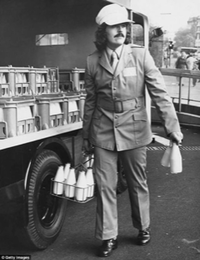


 FORMER Daily Express back bencher Len Gould has died at his home in Spain aged 73. He had been suffering from cancer.


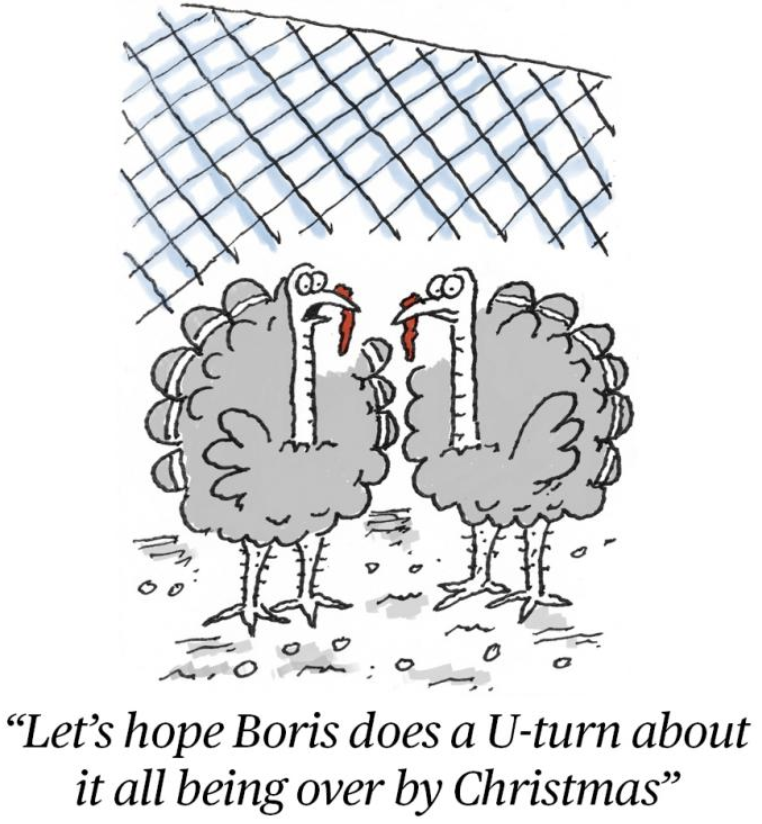


 Lord Drone is saddened to announce that former Sunday Express literary editor Graham Ball died on Sunday, 4 May, in a London hospital after a fall at home. He was 69.


THE WORLD’S GREATEST ONLINE NEWSPAPER
Times Obituary: The irepressible Michael Green

Even Michael Green’s best friends thought him a menace, albeit it a loveable one. It was to do with the way that he would flail his arms around when telling a story. No vase was safe. On one occasion a tray of champagne glasses was wrested from a passing waiter and pitched into the lap of the French actress Marie-France Duquette, an innocent bystander.
When Green appeared on an Eamonn Andrews’s chat show to plug one of his humorous books, The Art of Coarse Golf, he wielded a seven iron in the studio to demonstrate how not to swing the club and, in his excitement, accidentally let go. It missed the head of Spike Milligan, another of the guests, by a matter of inches and, visibly shaken, the comedian barely spoke another word for the rest of the show.
One of the quirkiest humorists of his generation, Green created a minor classic with The Art of Coarse Acting, an affectionate but all too accurate exposé of the pretensions of amateur dramatics. The book was dedicated to those who perform to sparse audiences in church halls amid lethal props, while the coarse actor was defined as one who can remember his lines, but not necessarily in the right order. “The Coarse Actor’s aim is to upstage the rest of the cast,” it said. “His hope is to be dead by Act Two so that he can spend the rest of his time in the bar.”
Green was to produce 15 Coarse books on subjects ranging from gardening to sex. The series sold millions of copies and remained in print for 30 years. To this day The Art of Coarse Acting remains essential “how not to” reading for amateur and professional students of drama.

Michael Frederick Green was born in 1927 into a lower-middle class family intent on keeping up appearances. His father, who had lost an arm to a German shell, was awarded a war pension, which maintained a modest home in a suburb of Leicester.
Childhood thrills for Green centred on football and rugby — especially rugby, which was then the chief spectator sport in the Midlands. His delight was not so much in the game as his father’s barracking of the players and referee, providing material that was to be recycled 50 years later for Green’s rugby column in The Sunday Times and in The Art of Coarse Rugby. The coarse rugby player was described by Green as differentiated from the rugger player in that he does not enjoy playing.
By 1939 Green was at Wyggeston Grammar School, and in the evenings an enthusiastic member of the local amateur dramatic society. His first appearance was as a schoolboy in Goodbye, Mr Chips, the James Hilton potboiler about an old schoolmaster. In the final scene, when Chips draws his last breath, Green was one of the heavenly youth choir singing Lord Behold Us With Thy Blessing while Chips suffered what became known as the All Purpose Coarse Death. “Mr Chips was heard groaning and tottering round the stage, clawing at furniture, until a crash announced he had fallen down,” Green said. “The author intended Chips to die peacefully, but this was more like the demise of Lucky Luciano.”
The desire to act or show off grew. Green noted that nobody seemed to pay attention when he was serious — only when he was fooling about.

After leaving school at 16 he started work as an editorial messenger with the Leicester Mercury. There he was tutored by a vintage reporter who told him of the days when the results of a football match were sent back to the newsroom by carrier pigeon (“It was supposed to home on a loft in the Mercury roof, but sometimes went to the rival newspaper instead.”) Green was soon writing up births, marriages and deaths. Attending inquests, where he discovered how easy it was to die from a scratch or a germ, made him a lifetime hypochondriac.
The true mark of his character, however, was a compulsion to do anything for a laugh, even when the inner voice was urging caution. The episode that entered the folk history of provincial journalism started with Green and another young journalist on night watch for German incendiary bombs. The overnight fire-watching job was unpopular, except with boys his age who were too young to be called up — for they could drink brown ale, use the typewriters and telephones and help themselves to the editor’s cigars. Bored with reading the editor’s private correspondence one night, the pair descended to the machine room to inspect the printing presses. The attraction of the start button was irresistible. As Green recalled, “the presses burst into life with a great roar and started to print the first and only midnight edition of the Leicester Mercury”. By the time he had found out how to stop the machines an enormous reel of paper had broken under the strain and he was knee-deep in newsprint. The next day Green was looking for another job.
He found one at the Northampton Chronicle & Echo, where they were always short of staff, it was said, because they paid the lowest wages. The paper was also distinguished by having files going back to 1720. Once a week it was Green’s job to search the records for a feature, 200 Years Ago. From this came the inspiration for his most endearing character, the dissolute Squire Haggard, whose fictitious journal first appeared in the Echo and re-emerged in the 1960s as part of the Peter Simple column in The Daily Telegraph.
The Art of Coarse Rugby preceded 14 other books in the series
Among the tips offered by Green was 'never take a penalty with a cigarette in your mouth. Always hand it to the referee. These little courtesies distinguish the gentleman.
In common with authentic diarists of the period, Haggard, in many ways a Hogarthian grotesque, was obsessed with exotic diseases (“Amos Bindweed died from Putrefaction of the Tripes”), executions (“Jas Soaper hanged for stealing a nail”) and disasters at home and abroad (“Plague raging in Cadiz”). Less authentic were Haggard’s romantic troubles (“Because of the wet weather my Rheumaticks are so bad I was unable to have my usual whore yesterday”) and his relationship with his tenants (“this day being that most sacred feast in the Christian calendar, viz: Quarter Day, I sallied forth to evict those behind with their rents”). Haggard made his appearance in book form in 1975 and in 1990 was adapted by Yorkshire Television for two series.
After war service in tanks and the education corps, Green returned for a brief spell at the Echo, where ambitions to write the great novel were eventually reduced to a fictionalised memoir, Don’t Print My Name Upside Down, while further incursions into amateur theatre gave him a taste for Shakespearian pastiche. This resurfaced years later in his Coarse Acting Show at the Edinburgh festival with All’s Well That Ends As You Like It and Henry the Tenth (Part Seven). In 1950 he became a sub-editor on the Birmingham Gazette, where he also reported on rugby matches.
A move to Fleet Street came in 1953 with the offer of a job on The Star, then one of a trio of London evening papers. The Star was by far the weakest of the three, a sweatshop stuffed by old hacks desperate to put off retirement. Green stood it for four years before going freelance to write documentary features for Rediffusion, London’s independent weekday television service.

Part-time work on the sports desk of The Observer helped to build his reputation as a reporter who could enliven the account of an otherwise dull match with a few laughs at the expense of the players. This led to an offer from Hutchinson to write The Art of Coarse Rugby. Among the tips offered by Green was “never take a penalty with a cigarette in your mouth”. “Always hand it to the referee. These little courtesies distinguish the gentleman.”
The Art of Coarse Sailing and Even Coarser Rugby appeared before he really got into his stride with Coarse Acting. The spin-offs from this book included a coarse acting competition and a sell-out appearance at the Edinburgh festival where professional actors gave their worst in rehashed classics such as The Cherry Sisters and, in homage to Beckett, Last Call for Breakfast. In 1979 the coarse acting one-act plays came to the West End.
Having lived on his own for many years in west London, where he declared his garden a nature reserve to save cutting the lawn, Green met his future wife through a shared passion for amateur dramatics. He and Christine, a pianist and music teacher, were actively involved in the Questors Theatre in Ealing. On the night they met she was serving behind the bar and he ordered six G&Ts.
After 23 years together they were married in 2004, when he was 77 and she 55. “He was one of life’s natural bachelors,” she said, “always nervous about being tied down. Even then he bolted when we got to the register office. We had to cancel and try again another day.” She described him as “maddening, but lovely” and the untidiest and clumsiest person she had met. “Always spilling things. If there was a room completely empty apart from one small object he would somehow manage to trip over it.”
Mickey, as his friends called him to wind him up, was convivial to a fault and considered a regular in a number of Fleet Street pubs. This is not to suggest, however, that he was a dissolute figure, or an unhealthy one — he not only continued playing tennis into his late eighties, but managed to avoid maiming his opponents with flying rackets.
Michael Green, humorist, was born on January 2, 1927. He died of a heart attack on February 25, 2018, aged 91
13 comments
Comments
Grumpy Granny 8 1 hour ago
The Art of Coarse Rugby and Coarse Sailing were our books of choice when our daughter was born ,truly distracted me !
ReplySteve Iles 2 hours ago
Only last night we were laughing about the Art of Coarse Sailing and the dance of the muddy death.
ReplySimon Miller 2 hours ago
I had that edition of Coarse Rugby throughout my teenage years but it disappeared in one of my brother’s raiding parties from university, luckily a ‘68 hardback was found in a Second-hand bookshop in those pre-eBay days!
If anyone had written a biography of my rugby days, it could have been mistaken for a (poor in comparison) companion piece to Michael’s hysterical tome! 😁
RIP Michael.
ReplyJohn Pearce 4 hours ago
A lovely evocation of a funny and genuine man.
His two volumes of memoirs - "The Boy Who Shot Down an Airship" and "Nobody Hurt in Small Earthquake" - deserve a mention [which they don't get above]. Honest, unpretentious and beautifully written, they are I think his best work, evoking a series of worlds - the rural midlands, flourishing local journalism, the Saturday football "pink" editions, hot metal Fleet Street, the shabby genteel lower middle class, life as part of a conscript army in the last days of WWII - which have gone for ever. His description of the moment when they switched the teleprinters off on the day when the News Chronicle went bust - "it was as if a heart had stopped beating" - is genuinely moving.
I suspect the books are long our of print, but you could get copies on Amazon or the Advanced Book Exchange.
ReplyL G 4 hours ago
is it ok to laugh out loud at an obituary? Brilliant piece.
ReplyChris Adams 5 hours ago
A wonderful 'coarse obituary' which was so delightful to read. I am sure he would have enjoyed it too.
ReplyIain Sanders 5 hours ago
I have a feeling it was a lot of fun researching his.
ReplySteve Young 6 hours ago
Avidly read them many years ago. RIP MR Green.
ReplyIain Macleod 6 hours ago
He was the JK Rowlings of my generation. As someone who was almost allergic to reading books it was the art of course Acting, Rugby etc that I read with a passion and woke up a reading bug that my awful school education had almost killed.
Thank you Mr Green
RIP
Replybrian wright 8 hours ago
I still think The Art of Coarse Rugby was one of the funniest things I've ever read.
ReplyM A KYLE 11 hours ago
He was a wonderful comic writer and reading his works was great experience. They still sit in pride of place on my bookshelves. Anyone who participated in Am Dram will testify to the total accuracy of The Art of Coase Acting. May his memory survive.
Replygrumpygit 14 hours ago
shame it wasn't Philip Green
ReplyGillian Palmer 15 hours ago
A man of utter genius, charm and wit who was possibly the greatest influence of any on my university theatre of the 1980s...so happy to learn that he lived so long and went with a proper sense of drama...rip, Michael
My favourite moment that sticks in the mind, from his Mozart opera
Continuo: "Here comes the Burgomeister, he is a risible fellow who ever enjoys a jest, I will wear his hat and how he will relish the confusion"
Song (Chorus): "The Burgomeister's Hat"
Joy
DRONE EXCLUSIVEHow the Daily Express discovered Twiggy

MEET THE WAIF: Twiggy with Justin de Villeneuve
By TERRY MANNERS
Doing some research on the Swinging Sixties for a magazine this week, I came across yet another wonderful tale of the Express in its Fleet Street heyday. The story of how the paper under its Editor Derek Marks and his Fashion Editor Deirdre McSharry launched the girl who became the Face of the 60s — Twiggy. Many of you know bits of the story but for those who might not, I thought I would record it for our much-loved Daily Drone.
I found many contradictory versions including conflicting statements and claims from people who were involved and so I trawled through my pop/Sixties biographies and published interviews of the time to get a clearer picture. If anyone can add to this, or correct this version please do. I also record it because I have a particular fondness for Twiggy who was born and grew up a couple of streets from me in London. She became the skinny and rich one, I became the tubby one. And of course, I have a fondness for the Express as we knew it.
IN JANUARY 1966, a waif-like 16-year-old named Lesley Hornby from Neasden, North London, walked into the London Editorial of the Daily Express for a picture shoot and a whole new world opened up for her and fashion houses across the globe. By the end of the following year she was to be the richest woman in England — official. And by the end of the decade a Sixties icon.
While still at grammar school but working part-time on Saturdays as a shampoo girl for two pounds ten shillings a week in a London hairdressing salon, Lesley, who dreamed of being a model, met and fell for rakish man-about-town Nigel Davies. The former boxer and bodyguard who had been associated with the Krays now worked part-time as a hairdresser for Vidal Sassoon and had a clothes and antiques stall in the Chelsea flea-market. He was 10 years older.

At first he nicknamed her Stick, because of her long, skinny legs. Then Twigs because of her habit of painting false eyelashes on her face under her bottom eyelids. She did this to copy the face of her much-loved rag doll at home.
At the time, the girl whose favourite meal was pickled baked beans, was 5ft 6in tall, weighed just six stone and had a 31AA-22-32 figure.
Swinging London was in full pelt, Merseybeat and The Beatles were sweeping the globe; England was gearing up for the World Cup and the Daily Express was selling four million copies a day. Those were the days my friends. And even at this time our old friend Richard Compton-Miller was a leading society writer.
Nigel wanted to be a big part of this new dawn. But his name didn’t go with his portrayal of himself as a flamboyant hairdresser and entrepreneur, so he adopted the name Justin de Villeneuve, after a French town, and decided to go into the fashion design business with his new girlfriend who had been taught to sew by her mother Nellie and made trendy clothes for herself and her friends in the kitchen of her home.
But the era of the super model was just taking off with beauties such as Jean ‘The Shrimp’ Shrimpton and Pattie Boyd. Curvaceous and upper class, they were becoming as big and rich as the pop and film stars who dated them. Justin’s willowy, stick-thin girlfriend with straggly, long blonde hair and a swan-like neck was totally different, so different that he thought she had something else to offer — a new look for the ‘girls in the high street’ who still wore Beehives; Flipped Bobs and Hippie styles; combs; slides and headscarves. So he became her manager with the blessing of her father and began to market her, sending pictures to magazines.
At this point in the Twiggy story versions differ and are even disputed by some of the main players involved at the time, including de Villeneuve who was later to have an acrimonious split from Twiggy. But after listening to taped interviews and trawling other sources this is what I believe happened.

The Australian magazine Woman’s Mirror in London agreed to see her but when she arrived with Justin, the fashion department weren’t convinced that she had model looks. And they weren’t sure of her cockney London accent either (although she was born North of the Thames and wasn’t really a cockney at all). Her figure, they said, wasn’t full enough. But they loved her face — especially her eyes.
The Editor got involved and on hearing that Justin was friendly with top hair stylist Leonard Lewis, pictured left, of Leonard’s of Mayfair they decided to send her along to his expensive salon to have a new hairstyle with the possibility of a 12-month contract for headshots.
Leonard was big time, with clients such as Jackie Kennedy, Mick Jagger, Paul McCartney, Reggie Kray and Audrey Hepburn. So Lesley took the day off school and went along with Justin. It was a good session and Leonard was impressed with her face. “Her hair was long, untidy and ratty when Justin brought her in,” Leonard recalled. “We had a long discussion on what to do with her.”

At the time Leonard was looking for someone to model an idea he had for a new boyish cut. While she was in the chair for the Mirror Magazine, he rang his friend, celebrity photographer Barry Lategan, pictured right, and asked him: “Would you have a look at this girl for me Barry, I think she would make a wonderful model for the new cropped-hair style that I’m developing.”
A few hours later Lesley and Justin were on a bus to Lategan’s studio in Baker Street. When they arrived he recalled: “I was enchanted with her from the moment I saw her. She walked around my studio staring at everything. She truly had a different look and an amazing, big laugh. She brought the idea of teenage-hood into my life for the first time; she was a non-ruling-class girl who knew how to handle herself with professional elegance and dignity.
“But she was biting her nails and suddenly Justin said: ‘Don’t do that Twigs!’ I asked him why he called her that and he said it was his nickname for her legs and the long eyelashes she painted on her face. It was his brother’s nickname for her too. I told him that it would be a good name for a model.”
Lategan liked what he saw. He rang Leonard back and arranged a photo shoot for when the new look was finished. The next morning flushed with hope but not much money Justin took Twigs along to Mod fashion icon Mary Quant and splashed out on a new wardrobe for the big day. When it came Twigs found herself in Leonard’s chair for seven hours as he and his team cut her long blonde hair and coloured it brown, then re-cut and re-coloured. Finally Leonard was satisfied with her boyish look. He said: “She got a bit tearful at one stage seeing all her long blonde hair cut off but soon began to realise she was looking good.”
Justin said later: “When he’d finished, everyone in this big Mayfair salon looked at her and went quiet. That’s when I knew we were onto something.”
Twigs and Justin then got a bus back to Lategan’s studio where Leonard met them later.
Twiggy said later: “My family didn’t really read newspapers and I didn’t know much about them. But I knew the Daily Express was big in the world — and it was a broadsheet then. They were excited when I told them.”
Lategan said: “I looked through my camera and this face looked back at me. I turned to Leonard who had just arrived and said 'wow'. It was the effect of her looking back at me. I couldn’t find the adjective to describe it. I think it was the eyes, they were big and wide and she had such presence. She was gawky but she had a sort of elegance. Some people cower in front of the camera, but she became who she was. I kept the camera at her eye level.
“Then I said to Justin, what shall we call her and he said Twiggy of course.”
Next day when Leonard saw the black and white images back at the salon he was hooked and hung them in his reception area. Meanwhile Lategan began to send them to the media. But Leonard had another idea. He took a taxi to see his old friend and client Express Fashion Editor Deirdre McSharry in the Black Lubyanka. He knew her influence was huge in the fashion world and took the new pictures of Twiggy with her Bambi eyes along.

Here the story varies again over what happened next. Some say that Deirdre, pictured right, went to Leonard to have her hair styled and she saw the pictures of Twiggy in reception. But Deirdre, who is now in her mid-80s and lives in Bath, said in an interview in The Oldie last year:
“I remember it so well. I’d had a dreadful photo shoot with an appallingly difficult model. I came back to the office in Fleet Street and my hairdresser friend Leonard arrived to see me. I told the front hall to send him up. He showed me pictures of a new hairstyle he had created — and the model had such a sweet little face. Beautiful. I thought to myself, we need sweet faces in this cruel world. And that was Twiggy.”
Leonard gave Deirdre Lategan’s telephone number and she fixed a meeting with Justin and his star-to-be the next day. Once again Justin and Twiggy, who took the day off school travelled by bus, this time to Fleet Street. Twiggy said later: “My family didn’t really read newspapers and I didn’t know much about them. But I knew the Daily Express was big in the world — and it was a broadsheet then. They were excited when I told them.”
Deirdre took the couple for tea and biscuits and was impressed with the willowy waif from Neasden, her wide eyes, lower eyelashes and boyish haircut. She was certainly different. They agreed a fee for a photo shoot back over the road in the Express and an hour later Twiggy was in front of the camera again, this time wearing her own clothes ... a pair of bell bottom jeans and a skimpy polo neck sweater. Then the couple went home to Neasden by bus and told her family. Next day she went to school. Deirdre later said of her: “She had genuine charm, extraordinary application and was an iron butterfly, coolly eyeing everything, never missing an opportunity to shine. I loved her Bambi eyes.”
The following morning Twiggy’s dad, master carpenter Norman, bought the Express, but nothing had appeared. The next day, he scoured the paper again, and the next. Nearly three weeks passed, and the family was giving up. Twiggy was obviously too skinny to be a model as she had been told before. But the truth was the news agenda was heavy and the space Deidre wanted for her protégé wasn’t available. Marks and his Fashion Editor agreed not to throw the opportunity away.

Three weeks later Twiggy’s dad decided to give it one last try and went out again. An hour later he burst into his daughter’s bedroom with an open Daily Express shouting with joy and proudly displaying the spread: Twiggy – The Face Of ’66. With a sub deck: The Cockney Kid with the face to launch a thousand shapes. And she’s only 16.
The copy read: "That invincible smile, the rock-hard confidence, despite her 5ft 3in* frame, in a shrunken sweater ...
“This is the name – Twiggy. (Yes really), because she is branch slim, bends to every shape in fashion and has her hair cut like a cap made of leaves. THIS IS THE LOOK that from this moment will launch thousands of clothes, a craze for freckles, dozens of hairpieces and will cause a sell-out in eye pencils.”
She was pictured in her jeans and skimpy sweater and Lategan’s salon photo was also used. The news was out and for Twiggy the phone didn’t stop ringing. She did shoots for Honey, Petticoat, Brides, Look and Fabulous. She told the Express: “It was like being in love. In front of the camera I seem to get an extra burst of energy, like the feel of the sun on your face in the Spring.”
The following month, the waif from Neasden did her first shoot for Vogue. By the time she flew to America and was mobbed at the airport a year later, she had appeared in 13 separate fashion shoots in international Vogue editions. Every door in London and New York was open to her and she partied with the stars. The New Yorker, Life and Newsweek reported on the Twiggy “phenomenon” with the New Yorker devoting nearly 100 pages to the subject. By 1970, she had been photographed by Richard Avedon, Cecil Beaton, Helmut Newton, Guy Bourdin and Norman Parkinson. Such was the power of the Express then.
TWIGLETS
Deirdre left the Express shortly after her discovery and went to The Sun. Later she became the revered Editor of Cosmopolitan.
*****
In 1986 Leonard collapsed in a Park Lane hotel and had successful surgery for a brain tumour. After that he suffered from alcoholism, bulimia and epilepsy. He went bankrupt and survived on income support in the home of his older sister, until some old colleagues, former trainees, and clients set up a trust to fund his nursing-home care. He kept his scissors, and a few friends, including Jack Nicholson, who visited for a trim. Others never bothered. He died in 2016 aged 78.
*****
The Express got Twiggy’s height wrong in the spread that launched her career. She was 5ft 6in. Not 5ft 3in. Don’t always believe what you read in newspapers.
*****
Last known reports of Barry Lategan were that he had ‘evolving’ dementia. (Ev. Standard).
*****
Justin and Twiggy parted in 1973 and their relationship became acrimonious with her disagreeing with his role in her success. He married and currently lives in Chelsea.
*****
To say thank you to Deirdre and the Express, Twiggy modelled a dress designed around the paper’s headlines.
*****
None of the stories anyone told is exactly compatible in the exact chain of events.
Don Woodward, production legend

Don Woodward, centre, with Clive Goozee and the late Norman Dixon at a reunion in the grand foyer of the Daily Express in July 2008
By CLIVE GOOZEE
Former Daily Express Deputy Sports Editor Don Woodward has died in Queen's Medical Centre, Nottingham. He was 87. He joined the Express in the late 1950s from The Star, the London evening paper, which was swallowed up by the Evening News in 1960.
Don was a newspaper production legend and enjoyed the Express’s glory days when the circulation topped four million a day. He was a master of page design and a genius at making quick changes when a big story broke. At the end of a busy evening he would be off for ‘a spot of medicine’ with some of the sports team. Who would have thought — journalists in the pub at closing time?
Don took his wife Cathie from Orpington back to their home county when he retired in 1988. They bought a flat in the centre of Nottingham in the former maternity hospital where local MP Kenneth Clarke was born. He closed it when he was Health Secretary.
For a number of years the Woodwards lived there only in summer, preferring the warmth of New South Wales and Florida to the British winter.
Don married Cathie on May 5 1953, Coronation year, and they celebrated their diamond wedding with a party five years ago at Don’s second home, Trent Bridge, where he was a respected member. He gave an amusing speech to the assembled company but Cathie said it was too long! She died in 2015.
He was also a member of Sherwood Forest Golf Club and wrote a book about its history.
Don leaves five children, David, Peter, Kim, Jane and Ann, eight grandchildren and six great grandchildren.

Don with the late John Lloyd at the Fleet Street reunion
