


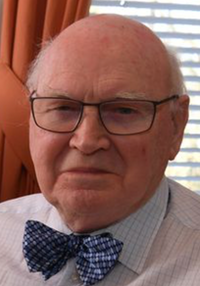


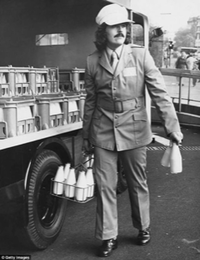


 FORMER Daily Express back bencher Len Gould has died at his home in Spain aged 73. He had been suffering from cancer.


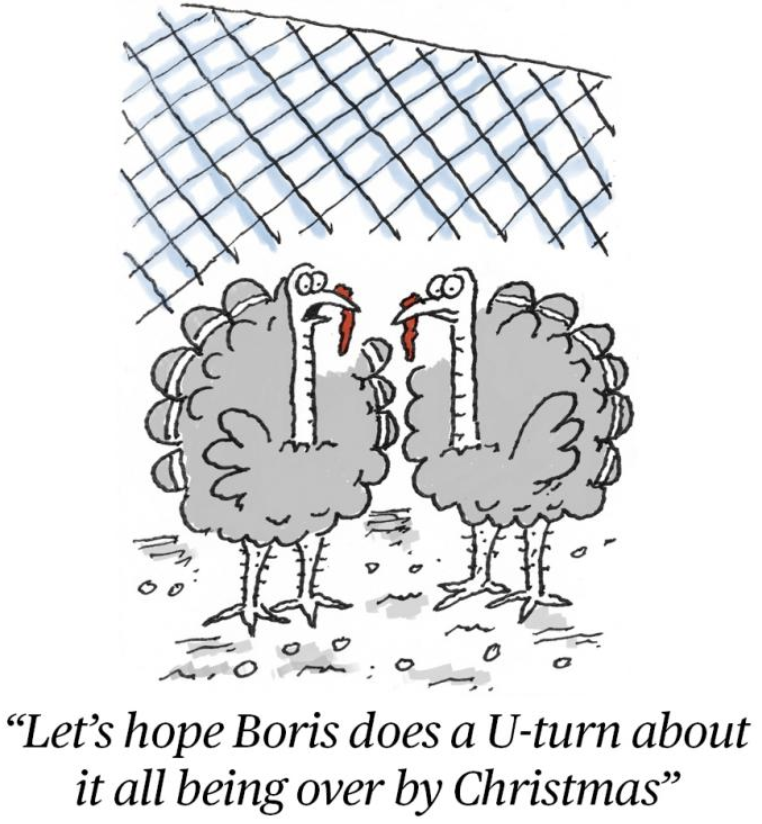


 Lord Drone is saddened to announce that former Sunday Express literary editor Graham Ball died on Sunday, 4 May, in a London hospital after a fall at home. He was 69.


THE WORLD’S GREATEST ONLINE NEWSPAPER
Beaverbrook: Telegraph book review

'VULGAR CANADIAN': Lord Beaverbrook, the archetypal Press baron, in 1952
Picture: HULTON ARCHIVE
From the Sunday Telegraph, May 19, 2019
Lewis Jones reviews Max Beaverbrook: Not Quite a Gentleman by Charles Williams
Charles Williams’s new biography of the press baron Max Beaverbrook might more accurately have been subtitled Not Remotely a Gentleman. Margot Asquith identified him as “a vulgar Canadian of the lowest reputation”. Not only did he wear brown shoes with a blue suit, he was generally regarded as a thumping crook. Hugh Cudlipp, who worked for him on the Sunday Express, called him “tyrannous, vindictive and malicious”. He was a treacherous friend (“However dire the dangers of his enmity may be,” wrote Violet Bonham Carter, “they pale before the perils of his friendship”) and, according to this biography, “a hard and demanding sexual master”.
He was, though, extremely good at making money and friends. His approach to everything was purely transactional and he was truly an artist of the deal. As proprietor of the Daily Express, he even contrived to make a deal with the shrewd Lord Rothermere, owner of the rival Daily Mail, that allowed him to fund the Express with the Mail’s profits.
As a journalist, MP, newspaper owner and government minister, Beaverbrook was much given to “grand visions, potentially inspiring” – and constantly changing. The only fixed point was his devotion to the Empire, which Williams traces to his childhood, as Max Aitken, in ultra-loyalist New Brunswick, where his father, a Scottish émigré with an Old Testament beard, was a Presbyterian minister. Max was a wastrel youth, but on his 21st birthday, in May 1900, he had an epiphany. Over whisky by a campfire, he was inspired by his friends’ talk of business: “The idler became a demonic worker,” he later wrote, “the spendthrift a rigid economist”.
Over the next decade, he went on to make enormous amounts of money, in a series of complicated and probably shady deals involving cement and utilities, and in 1910 he moved to London to make even more. That year, supported by Rudyard Kipling, his fellow imperialist, he was elected Unionist MP for Ashton-under-Lyne. The next year, to howls of indignation from Canada, he was knighted, and in 1916 given a baronetcy. In 1917, Lloyd George, who owed Aitken a favour or two, recommended him for a peerage, and the King reluctantly agreed, creating him Baron Beaverbrook. Kipling designed him a coat of arms featuring two beavers.

Beaverbrook in 1926 CREDIT: FPG/ARCHIVE PHOTOS/GETTY IMAGES
He acquired newspapers with the same rapidity as he did titles: The Globe, the Daily Express, the Evening Standard, and in 1918 he launched the Sunday Express. He used them to shout his opinions, and to vilify anyone, even friends, who disagreed. Lord Birkenhead wrote to complain about David Low’s cartoons of him in the Standard: “I never had cause for grievance until you, a friend, allowed a filthy little Socialist to present me as a crapulous and corpulent buffoon.”
The Express ran an “Empire Crusade”, demanding a customs union with the Dominions and Dependencies, and in 1930 Beaverbrook launched the United Empire Party, which did not thrive.
His other, related, crusade was isolationism and appeasement, which he stuck with, in a treasonous manner, even after 1939. In Jan 1940, he met the Duke of Windsor at the house of Walter Monckton, who was so appalled by their conversation that he reported it to a friend in the Foreign Office, who circulated a memo to colleagues:
W.M. tells me that he was present at a frightful interview between the D. of W. and the Beaver two days ago. Both found themselves in agreement that the war ought to be ended at once by a peace offer to Germany. The Beaver suggested that the Duke should get out of uniform, come home and, after enlisting powerful City support, stump the country... he predicted that the Duke would have a tremendous success… This shows you what a menace the Beaver is.
The next year, Churchill sent him to Moscow to negotiate with Stalin, where everyone agreed that they got on famously. “Stalin and Max did everything two lovers can do except sleep together,” wrote Robert Bruce Lockheart, the journalist and spy, “and that only because too busy”.

Beaverbrook addressing a Paddington crowd in 1930 CREDIT: HULTON ARCHIVE
The Russian war effort became the Beaver’s new crusade. Stalin, he told the House of Lords, would “go down in the long list of Russian heroes as Stalin the Great”. And he brazenly defended the show trials and purges: “It is now clear that the men who were shot down would have betrayed Russia to her German enemy.”
Ivan Maisky, the Russian Ambassador to Britain, noted in his diary that Beaverbrook’s attitude to Churchill was “very changeable: one day he might praise him as Britain’s greatest statesman, on another he might call him a ‘swindler’, ‘turncoat’ or ‘political prostitute’ ”. But Churchill loved Beaverbrook’s company, drank and joked with him and, despite constant operatic letters of resignation, gave him a series of ministerial appointments: aircraft production, information, supply.
Unwisely, he also put him in charge of his disastrous election campaign of 1945. Aneurin Bevan explained their relationship: “Well, you see it’s like this: it’s as if the old man had married an ’ore. He knows what she is but he loves her.”
Williams writes that Beaverbrook’s “love life (if it can be called that)… is not easy to disentangle”. But he does he best, devoting three chapters to it. They make squalid reading. His first wife, Gladys Drury, of Halifax, Nova Scotia, was 18 when she married him, aged 26. “Her figure was stocky rather than refined,” Williams ungallantly notes, “but she was (an important asset) even shorter than Beaverbrook himself”. Her sister, Helen, had a more refined figure, and by one account Beaverbrook seduced her, too, “and kept [her] financially dependent on him most of her life”.
Williams quite often refers to Beaverbrook’s “instinctive dislike of the English upper class”, but this did not extend to its female members. His name was “linked” to those of Bridget Paget, Daphne Weymouth, Sibell Lygon, Edwina Mountbatten, Gwen Ffrangçon-Davies and Doris Delevingne, who once declared that “an Englishwoman’s bed is her castle”. In 1919, Diana Manners wrote to Duff Cooper from the Paris Peace Conference about Venetia Montagu: “It’s a disgusting case – her face lights up when that animated little deformity so much as turns to her. [She and Beaverbrook] are living in open sin at the Ritz in a tall silk suite with a common bath…”

Beaverbrook with Lady Diana Cooper in 1935 CREDIT: HULTON ARCHIVE
His first serious mistress was Jean Norton, whom he betrayed remorselessly during their 20 years together, and before her death replaced her with a younger model, Lily Ernst, the Viennese ballerina. Ernst rejected him when he shouted “bloody old Jew” at a beggar in Cannes, but he wore her down. “The best thing I knew about Max Beaverbrook,” said Michael Foot, “was that Lily Ernst truly loved him.” Of course, he did not love her back.
Clement Attlee is reported to have said that Beaverbrook was the only evil man he had met. This thorough biography leaves one in no doubt that he was an ironclad, ocean-going monster.
Max Beaverbrook: Not Quite A Gentleman is published by Biteback at £25. To order your copy for £20, call 0844 871 1514 or visit the Telegraph Bookshop
The Christiansen Chronicles

Arthur Christiansen, seated at desk, at work in the Express offices in Fleet Street,1949. The man on Christiansen’s immediate left, in the jumper with the sleeves rolled up, is Harold Keeble, who went on to edit the Sunday Express from 1952 to 1954 when he was replaced by John Junor
(Photo by Chris Ware/Keystone Features/Hulton Archive/Getty Images)
Arthur Christiansen was editor of the Daily Express during its greatest years, from 1933 to 1957. During this time he increased circulation from less than two million to more than four million.
Each day he wrote a bulletin, commenting on that day’s newspaper, which was compulsory reading for members of editorial staff.
These fascinating bulletins will now be reprinted in the Drone, a new one, sometimes two, every day, latest at the top.
letter to the editor
SIR — Excellent bulletin stuff. I can’t identify the hangers-on in your 1949 Christiansen picture but I recognize the desk, behind which sat many other editors I encountered. I wonder if the soppy socialist Gary Jones is using it? Retch has probably flogged it off.
RICK McNEILL
THE DIARY
The Diary should not be a political vehicle. It can talk about politicians in the social sense but it should not duplicate with either Opinion in the Daily Express or Crossbencher in the Sunday Express. (January 23, 1953)
The word "recently" which occurs twice in the Diary should be barred. It reeks of library cuttings. It reeks of old news. (April 3, 1953)
*****
I have the idea that our Diary is dealing in the rarefied atmosphere of the Upper Ten in society, art, politics and diplomacy lately.
This column should be of the widest range of interest, dealing with all sides of life and particularly London life.
As women are the most earnest readers of diaries, there should be a pronounced effort to flavour the column in their direction. A sense of activity and a sense of observation are most helpful. I wonder what luxury vegetables Fortnums are selling today and what price they are? There is often a lot of news to be got out of shop windows. (March 17, 1953)
*****
Diary paragraphs are running too long, even in the last edition. We must vary the pace to keep the readers interested. (February 3, 1953)
*****
We must standardise a magnificent tailpiece for the Diary each day. (January 8, 1953)
*****
GENERAL BULLETINS
As part of our 1953 policy I seek wider coverage of cultural pursuits in the newspaper.
We have a fine staff to achieve this purpose. All it requires is the enthusiastic co-operation of those who produce the paper at night.
I make many rules — as, for example, the grouping together of theatres, ballet, and music in Page Three, but the occasion may well arise when any of these subjects will demand fuller treatment than can be given on this page.
When there is anything startling, anything fine. anything novel, anything new, let us be alive to the fact that many rules are made to be broken and that the paper will always be better if initiative and imagination are shown. (January 1, 1953)
*****
We are slipping into bad habits again over theatre coverage. The critic is being asked to keep his stuff short and then when he does so he is still being cut.
I think this is the wrong approach in the first place. A man should not be asked to keep his stuff short. He should be asked how much his stuff is worth. Space problems should not be his concern and, of course, if his stuff is good and his subject worthy, space can be found.
But in any case we will never sustain our reputation as a paper specialising in this kind of news if the critic is harassed in the first place and cut in the second. (April 10, 1953)
*****
I dislike boxes that float in the middle of type. My inclination is to miss them altogether. We should not have boxes anyway, but when we do have them, put them at the top or the bottom of columns. (November 1, 1950)
*****
Advice to the critics: they should not assume too much knowledge on the part of the reader. It is their job to give information to the reader in such a way as not offend the erudite and not to patronise the ignorant. (April 1,1953)
*****
Page 5 pictures are printed so indifferently these days that we should make a special effort to introduce original methods of projection: arrows, tabs, reversed screen captions, marrying the pictures with the news as in yesterday's picture of Jack Buchanan on Page 3, and so on. The success of Page 5 depends to a great extent on original picture projection. (April 4, 1951)
*****
A long time ago, I put forward the idea that make-up depended on a strong beginning, a good middle and a strong end. We must not make every column shout against its neighbour. I see there are boxes creeping back into the paper all over the place. We must find a way of breaking up solid stuff without using them. (March 9, 1951)
*****
I detect a return of the joke headline — "Channel No.5" on Page 1 and "Jack and the beans talk out" on Page 5. The first headline is ingenious, the second frightful. But in general joke headlines must be avoided. The news will always beat the joke. (August 2, 1951)
*****
Deep and shallow headlines alternating are not only economical but bring contrast to the layout. (June 12,1951)
*****
Detail: In my young days in journalism we were forbidden to put blocks on the fold. Nowadays they are on the fold as often as not. Even the pocket cartoon gets on the fold. We should strive now to stop cutting off people's noses from their chins. (June 4, 1951).
*****
I have a note from our Science Correspondent which raises one of the oldest issues in journalism. And one that we can never quite cure.
I refer to headlines which turn probability into fact. Pincher wrote a story on Page 1 yesterday which stated that Britain mIght get a loan of atomic explosive, which would save a year's work.
The headline said : 'U.S. atom aid saves year for Britain:' thereby tuming a probability into a positive statement.
Headlines are liable to cause legal trouble by becoming too emphatic. We must keep them scrupulously accurate. (November 13. 1951)
*****
Most of the papers had good headlines on the enticement case, but top of the class goes to the Daily Graphic man who writes: "The man who came to dinner stole the cook.”
That headline has flow. It "says" easily. Our headlines are often, but not always, the best. Good headlines are written in vigorous, conversational, idiomatic language.
Good headlines should be capable of being read aloud, which the mind does subconsciously. We sometimes drop into sterile headline phraseology — not everywhere but more than is perhaps necessary. (January 29, 1952)
*****
A story had been fitted into a make-up instead of the make-up being designed round the best headline. So — write the ideal headline and then lay out your page. There is the policy of perfection! It would mean that we were the masters instead of the slaves of type — which is, of course, the basic weakness of the Page 1 streamer technique.
The headline, 'The horse with the heart of gold' is better than the first edition headline, 'Never-win horse delights owner.' Why? Because this is the kind of story that needs the oblique approach. (May 6, 1952)
*****
A streamer should fill out flush against the column rule. (February 29, 1952)
*****
In one of the papers today there is a headline, "Crystal set band leader made history," which reminds me of the headline written by one of the Liverpool papers when Lord Leverhulme died — "Death of a well-known Cheshire peer."
It is really pleasant to work on a newspaper whose headline reads simply 'Debroy Somers dies at 62'. (May 28, 1952)
*****
More and more I am convinced that the straight news should be in 99 out of 100 headlines. (June 9, 1952)
*****
Reminder — we should strive and strive and strive to produce a front page with no turnaways. (October 28, 1952)
*****
HEADLINE WRITING
Glad to see the paper reverting to normal streamer type on page 1 this morning. The 72 point and 84 point should be reserved for news of sensational international significance. (March 16, 1953)
*****
A story must always live up to its headlines and the headlines should never exceed the value of the story. (September 9, 1952)
*****
Fill out your headlines —
ELEVEN STORES
MUST CLOSE
on Page 1 this morning is too thin and spoils the rhythm of the paper. Headlines at the top of the page need space, but down the pages should fill out on the top line and balance well.
More tops showing above the fold on Page 1 than yesterday. That is helpful not only on the bookstall but in creating a sense of surprise on the front page.
As I said before, the Express is never better than when the readers get the sense that something happened yesterday when they pick up our paper while other papers make it just another day. (July 15, 1952)
*****
I have become a fan of Page 5 on holiday, with its simple make-up and not too many tricks. It is good to have a page where everything is straightforward. (No inverted knock at other pages intended; merely an expression of the viewpoint that every page has a purpose) (November 25, 1952)
*****
On Page 5 in the final edition there is a headline in most odd type — 'When there's a disaster'. I want to impress on all connected with the typography of the paper in London, Manchester and Glasgow that it is laid out in Century Bold and freak types should not be used. (October 24, 1952)
*****
On Saturday I had the feeling that there was just a bit too much white space in some of the headlines. When the decks are either very short or very full the newsy appearance of the paper suffers. (October 27, 1952)
*****
Pica in Column 8 Page One should be set left, not left and right, on account of the margin space. (December 12, 1952)
*****
I think we should try to pack more and more stories into the paper. Sometimes our exuberant display gives an impression of scanty treatment. Can we, for example. reduce the size of headlines on Page 3 when there is a half-page ad to contend with? (December 29, 1952)
*****
Beware of a rash of scored headings. They are effective when used with discretion but I could not see any reason why "Vicar accuses his bishop" in Column 8, Page 3, was scored. Scored headings do not seem to fit the outside column. (December 30, 1952)
*****
A reader of the Daily Express says: 'Don't you think your articles are interesting enough without having to draw particular attention to them by using spots and stars? In today's edition alone, I counted 16 spots and 40 stars.'
Dear, dear. Are we really dazzling our readers to that extent? CUT DOWN ON SPOTS AND STARS.
I see also that italic type is spreading like a rash through the news pages. It is thinner than the ordinary body type and does not break up our pages as effectively as ordinary indent. SO USE ITALICS SPARINGLY AND FOR SPECIFIC PURPOSES ONLY. (April 9, 1953)
*****
A reminder is hereby issued that type should be our slave and not our master. This applies particularly to the body type of the newspaper for, by and large, we are masters of headline type. But body type can be made to dance excitingly in front of the reader if properly used for display purposes. (January 26, 1953)
*****
The American Column today is the best of its kind because it gives us news of America, reflecting the mood of Americans towards their own problems and towards us.
I would like to see the pace of the intro paragraph varied from time to time. A dramatic squib is required occasionally to get away from the five or six paragraph method into which we have fallen.
Perhaps the only unsuitable paragraph in the column today is the first story. Why? Because it is not a typical American piece. It might have happened anywhere. It is just another human story which could have been sent from Timbuctoo. (January 2, 1952)
*****
It would be a good idea to concentrate on the last item in the America Column as well as the first. It seems to me that it should be in the nature of a tailpiece striking a lightish note. Something that the reader would look for each morning. Certainly the column should not end with a dull thud. (January 9, 1952)
*****
I see the America Column calls the New York Times tbe N.Y.T. Oh, please don't let us have any more initials than we can help. (March 6, 1952)
*****
I was delighted to see that American expression “Yackety yackety" in Newell Rogers's piece. That is not slang. That is virile use of a modern colloquialism. My idea of slang is to call a restaurant a 'joint'. But new words will always be welcome. (December 19, 1951)
*****
In the paper during the last day or two there have been many references to foreign currency which have been most praisworthily translated into pound sterling. But is it not ridiculous to say that the New York Yankeees are going to spend £8,000 to promote British football? I suppose that is 25,000 dollars, which is a nice round figure. (August 6,1952)
*****
I suppose there must be some days when there is not a lot of hard news about in America but certainly the America Column needs it all the time.
The tendency is to get too much magaziney stuff in this column, no doubt because it is filed early in the day.
Last night it could have been hardened up by the inclusion of one or two new stories that were filed later in the night. (July 10, 1952.)
*****
Too much show business in the America Column on Saturday, including some trivia about a bride of Mickey Rooney. That belongs to Lewin's column. I am not against show business at all in the America Column but it has got to be high-class. (December 1, 1952)
*****
Saturday's U.S. Column referred to a Pole with an unpronounceable name. Once upon a time we used to give the phonetic spelling in such cases. (December 8. 1952)
*****
The introduction of a human story on Page Two this morning — "Loveland wooer jailed" — suggests an idea. Why don't we have a human story from abroad every day in approximately the same position on this page? It would certainly invite those readers who find foreign and political coverage on Page 2 a bit forbidding.
The story need not be long, but it should be human and possibly labelled. (September 24, 1952)
*****
I would much rather see $2 used in the America Column than 14s because the English must wonder why this odd sum is collected in fine. Can we illustrate the America Column? We used to have a map when there was no illustration pin-pointing the news spots. Nothing should just be put into the Daily Express — everything ought to be thought into the paper. (January 15, 1953)
Last edition America Column selection is almost entirely masculine. There are three items out of 12 which might be interesting to women, but that is not a high enough proportion. (January 27, 1953)
*****
Over the last few days there has been quite a rash of explanatory footnotes. I rejoice, since I am always urging their use. But I prefer explanation in the text whenever possible so that it runs smoothly into the story. Only when this can not be done should the asterisk form be adopted. (April 20, 1953)
*****
Watch out for loaded stories. There is a tendency for reporters to write copy which, sentence for sentence, seems innoculous, but which adds up in detail to the dangerous business of creating a prejudicial atmosphere. (April 28, 1953)
[This advice was ignored by many succeeding editors, notably N Lloyd, Esq, but he did succeed in getting a gong out of it. — Ed]
*****
I feel that we are allowing our narrative stories to get out of hand. In this morning's paper, there is an admirable story which starts," Dennett," said the R.S.M. last night, "it all depends on you when the Queen arrives on Thursday."
If this were the only example of narrative writing in the paper I would be full of praise. But in the circumstances, I wonder whether an intro which said straightforwardly that the 22-year-old wife of Major Patrick Telfer-Smollett played the part of the Queen in a dress rehearsal yesterday would not be more appropriate.
Ninety-nine out of 100 stories in the paper should tell the news in the first paragraph and not in the body of the story. (April 12, 1953)
*****
Fashions change in journalism. Once upon a time I took the view, as you all know, that in order to make a story readable you had to personalise or angle the first paragraph with a story about a real or a generic personality.
I still think that newspapers are based on people but there is a development which I want to put into your minds in order that we should not be slavishly bound by the old conventions. I think that this suggestion is a step forward in the direction of more authoritative and interesting journalism. There are times when situations are of vastly more importance than the mortals who create them.
Perhaps I can best illustrate my meaning by two current examples.
Last week, Charles Foley wrote me an article about the French political situation. He began in the conventional way by inventing a character typical of the French miner. His name was Jean Dubois or Jean Deloncle.
The story said that this mythical miner was sitting down to a dinner of steak and chips and a bottle of wine for the first time since before the strike. Now I took the view that the French political crisis was of much more interest to the public than the fact of the miner sitting down to a good square meal.
So at my request, Foley rewrote his article and it appeared on Thursday morning as a most authoritative and brilliant piece of work It was full of personalities; it was full of first-rate descriptive involving people, but the incidents in which they were involved fell naturally into their place in the story,
Again, in our Monday morning paper, we carried the story of the submarine that had been under the water probably a month or more. And we concenrated on the fact that; during that period, one of the crew had written 120 love letters.
What I really wanted to read was an account of the reactions of men under these special conditions. Did any of them at any time feel claustrophobia when they regarded themselves as prisoners under hundreds of thousands of tons of water?
I would much prefer to have had a story dealing with the psycho-analytical side of this tremendous adventure than the trivial story about the 120 love letters. Mark you, the love letters come naturally into the story at a certain point.
There is the whole root of what I am suggesting. We can still carry human Interest in such stories as these without any sacrifice at all. But where the situation is more important than the person, don't strain to get off on a tangent.
I advise a study of Time and Life magazines for very fine examples of this kind of journalism. It is one of the reasons why Time and Life carry such authority with intelligent people in the United States of America.
It is the journalistic fashion to concentrate on the first paragraphs of stories. I believe in that. But I believe just as emphatically in the perfectIon of the last paragraph. (February 5, 1953)
*****
Many well-informed people buy the Daily Express so that they can get the news quickly — and they maybe turn to The Times if they want more expansive coverage. But if we over-humanise to such an extent that the serious news is omitted, we will lose the confidence of this important class of readership. (October 30, 1950)
*****
The gigantic sale of the Daily Express [more than fournmillion during Christiansen’s editorship] should never be used for belittling or mocking, or making cheap little people. We must go for the big shots when we want to criticise.
We should project our selection of news and features with human understanding, with generosity of purpose, and with a full sense of the power of a mighty Press, the power to hurt and wound that a mighty Press possesses.
Always we should be on our guard against the hard-boiled cynical Fleet-street approach. (March 16, 1951)
*****
I get queasy about salacious reporting. All the papers are going in for it, and in the case of the Indian doctor it was quite shocking for a family man to have to read so much detail.
Surely we can take a decision to print as little salacious matter as is necessary to prove the case for the prosecution or the defence — and no more.
A typical example last week was the phrase in the doctor case that there was intimacy in a car on two occasions on the back seat." It is the phrase "on the back seat” which leaves little to the imagination.
I feel that we should give a lead to the rest of Fleet-street in these reports, and leave the wealth of detail to the News of the World (March 5, 1951)
*****
News, news, news — that is what we want. You can describe a thing with the pen of Shakespeare himself, but you cannot beat news in a newspaper. (July 15, 1952)
*****
With the arrival of June weather we should try to make the paper suit the optimism of the masses. Never forget that the Daily Express is noted for its tonic effect. And while on this subject, it might be well to restate the three-fold rule for our paper: —
1. Never set the police on anybody.
2. Never cry down the pleasures of the people.
3. Remember our own habits and frailties when disposed to be critical of others. (June 4, 1951)
Always. always tell the news through people. (August 7, 1952)
*****
In general, I prefer political stories in Column Eight, Page One to human stories. (June 28, 1951)
The Daily Express is bought by business men as well as by housewives. How do we make an appeal to both? How do we keep the paper on a sound level of intelligence so that one section is interested and the other is not bored? (August 13, 1951)
*****
The professional touch in the paper which makes the Daily Express different from the other papers is best exemplified in the headline on the crossword on Page 6 — 'If the news flags, there's always the crossword.’
This neat tying-together of an isolated feature into the general scene is polished journalism. Maybe the readers do not notice it consciously, but subconsciously they know all about it. (October 25, 1951)
*****
I wish there were some way for newspaper men to diagnose how much of any single issue of a newspaper is read. Are there people who read every line of it, as we must? Do most people 'dip', reading only that which appeals to them?
I take the view that these are the majority. All my journalistic thinking is based on making the news so inviting to people that they read involuntarily news which normally would not interest them.
That is why I rejoice when headlines such as 'Four Mr Europes woo Miss Britain' are written on a story from the Strasbourg conference. It is the hope that such novel presentation will at least open the door. The novelty, of course, must be provided in nine cases out of 10 in the office. (November 27, 1951)
*****
A Page One top that breaks in the early evening is not of necessity driven out of its position by a piece of news that breaks at a later hour. It is the quality of the Page One top that has got to be taken into account at all times. The excitement of a minor 4.30am replate can be retained without interfering with quality. (January 8, 1952)
*****
It would do everyone connected with Fleet-street (especially editors) a power of good If they spent an occasional day off in unfamiliar territory seeing the newspaper reader as he is at work and play. In familiar territory in the neighbourhood of your own home you don't get the same perspective.
I am all for the unusual on Page One. I do not read stories of the type headed "Bandits gag, tie up woman" very much nowadays because people are always gagging and tying up women. Such incidents are as common as gas-oven suicides.
I am not very much in favour of stories of dog shows which describe the scene without telling us who won the championship.
A champion dog is a fascinating animal. It must have some peculiarities. It must be fed on some kind of diet. It must have an owner who wears clothes.
The descriptive story without facts went out of date even before the 24-page paper died. And I was the leader of the execution party.
I am also very much against such pbrases as "Sir Ian is one of the keenest brains which have ever served the Army." To carry a phrase like that you have to give an example of the keenness of the brain.
Sir Ian may have made a practical suggestion to Mr. Churchill during the war, which may qualify him as one of the keenest brains. That would be most interesting.
The Dally Mail reports a lecture on diet by Dr. Charles Hill, thereby showing its knowledge of the public interest in weight and diet.
We should never cease to be interested in speeches of this kind. More people weigh themselves now than ever before.
I know the man who owns the weighing machines in Woolworths and other big stores. It is quite a normal day's business to have 3,000 pennies placed in one machine. (December 13,1951)
*****
Every member of the staff should read not only his own newspaper but at least one other newspaper thoroughly before he comes to the office. (January 30, 1952)
*****
I journeyed from Rhyl to Prestatyn on Sunday past lines of boarding houses, caravans, wooden huts, shacks, tents and heavens knows what else. In every one of them there were newspaper readers … happy citizens, worthy, fine people, but not in the least like the reader Fleet-street seems to be writing for.
These people are not interested in Glyndebourne or vintage claret or opera or the Sitwells or dry-as-dust economics or tough politics. It is our job to interest them in everything. It requires the highest degree of skill and ingenuity. (July 7, 1952)
*****
In the third edition yesterday we had a gory picture on the front page of the Earls Court boxing. Keep blood off the front page when it is only incidental to the news. Remember the readers' stomachs over breakfast. (March 29, 1951)
*****
Many, many stories in the Daily Express today are of violent character. Maybe a leavening of more "thoughtful" news is necessary.
I do not see anything about the Liberal transport proposals, for example. We should always seek to balance so-called shock tactics with an appeal to the thoughtful reader.
There is always a danger of our over-loading the paper with humanities. I think we should keep our eye on the serious-minded people, never forgetting that good political controversy can be brightly reported so that it makes the widest appeal.
In any case, I think people are interested in serious subjects, and their interests should not be excluded from the paper by the finding, shall we say, of newly-born babies in sacks! (August 8, 1952)
*****
I put forward for discussion and consideration a more phlegmatic and sophisticated approach to the telling of the news. I feel that we are getting a bit melodramatic again and that some of the melodrama undoes the air of authority which a good newspaper should have. What might be called emphatic caps :- YOU are invited ... YOU are entltled ... and so on give an air of hysteria to the telling of some items of the news.
I noticed in the second edition the other night an intro about last week's great storms. The second paragraph began with the big word. THEY (meaning the storms) as though the reader needed to be bludgeoned into interest.
For me the only jarring note in our excellent coverage of the Drummond murders lay in the fact that the suspected farmer has always been "grilled” — often three or four times in one story.
He has never been “questioned". The French police cars have always "roared." All this emphasis tends to achieve a jumpy, hysterical atmosphere. For my part, I read with much pleasure the off-centre, consciously superior technique affected by Time magazine.
Time lets the excitement of the facts do the work, and still contrives to put itself over in a forceful, attractive and interesting way. (August 12, 1952)
*****
It always gives me pleasure when the Daily Express has a different lead story of value and worth from the other papers. (September 29, 1952)
*****
In the early editions at any rate there were too many stories about things and not enough stories about people. Significant news predominated — and while that is fine, you will never get people to digest significant news if there is nothing else on the diet sheet.
Contrast is the heart and soul of a newspaper. (Even the Manchester Guardian, on a day pregnant with heavy news, found space on its front page to say that goats are to be replaced by sheep on the Malayan rubber estates). (March 17, 1953)
*****
Every man on the reporting staff of the Daily Express ought to be able to estimate the approximate value of his story bearing in mind that there are very few places in the paper, owing to the advertisement makeup which allow for more than half a column. And bearing in mind also that most stories used are much shorter than that. (October 27, 1952)
*****
We may be suffering a bit from the belief that any reference in the evening papers to a story rules it out of our planning arrangement. Nothing could be further from the truth in relation to big news. The public will read the same story twice in the hope of getting more detail in a story that interests them..
It is our job to provide that extra ounce of detail and description; and the morning newspaper is particularly suited to do so in view of the time at our disposal over the evening paper staffs. (December 10, 1952)
*****
We fell into a bad error yesterday and had to carry a Page One correction on a story. While I seek to encourage members of staff to establish their own contacts in every field of endeavour, I must insist that they use the services of our specialists in checking their information. No one would dream of running a science story without consulting Chapman Pincher, for example. So what is the objection to consulting Percy Hoskins on matters concerning Scotland Yard and the police generally? (December 11, 1952)
*****
Are we not in danger of becoming a nagging paper, simply because it is much easier to criticise than to praise? We should strive now to undo that impression by taking as our slogan: ACHIEVEMENT — NOT FAILURE! (January 2, 1953).
*****
The Daily Mail says that the ex-Lord Provost of Glasgow died of heart disease. When a man under 50 dies, we should give the cause of his death unless it be cancer. (March 4, 1953)
*****
Yesterday in a story about a broken romance we referred to the the girl's occupation as that of bottler in a lemonade factory. We used to have a rule that we did not refer to the occupations of people in lowly stations when romance or broken romance was involved. It is a good rule and should be revived. (March 3,1953)
*****
We ought to have published a paragraph to say that the Queen went to the Ideal Home Exhibition. It is churlish of us to omit a reference to royal patronage of a rival newspaper's promotion effort. (March 3, 1953)
*****
On reading the paper in the sticks, it seems to me that certain basic faults were developing :-
1. We seemed to be striving to get all the "important" news on either Pages 1 or 2, or else leave it out altogether. This resulted in the remaining news pages being rather razmataz — too many court stories, trivial romances and the like. These should be offset by the inclusion of "serious" news stories, capably handled, giving the feeling of wider coverage.
There was a lack of attack in the publication of certain stories and ldeas. You cannot just put things into the Daily Express. By and large, they must be projected. We have always got to tackle the news emphatically, with boldness and confidence. On each page there should be a feature that attracts the eye. This does not necessarily mean the use of ever-increasing type size. It means the correct use of white space, the display of pictures, the head-line that intrigues the reader.
Whenever possible print a a woman's age. That's a fine paragraph in today's Diary about Lady Helena Hilton-Green, who flies to the hunt — but I wanted to know how old she was. (March 31, 1953)
*****
I have the idea that we are striving a bit too hard on make-up in some parts of the paper these days and that we should keep lay-out tricks under control. There is much virtue in simplicity. Always the reader OUTSIDE Fleet-street should be considered. (February 16.1953)
*****
I have always held the view that people do not read captions at the top of pictures because I do not read them myself. They are tolerated in the Express because they help display. 'The caption at the foot of the picture should tell the news, not the caption at the top as on Page 1 today. (June 13, 1951)
*****
I don't like sans type in column 8, page 5. It is all right in the middle occasionally but not on the outside. (August 9, 1951)
*****
I have the feeling that we should not use three-column splash stories unless the news justifies it. There are times when we are inclined to be enslaved by the make-up instead of being its master, and the three-column splash on an indifferent story is a symptom thereof. (January 21, 1952)
*****
By and large crossheads are badly done in all newspapers. They are written in a hurry on the stone and serve only one purpose — that of breaking up slabby columns. We should be the good crosshead specialists. (June 4. 1952)
*****
One thing in particular drives me frantic in newspapers. It is the misplaced crosshead or the misplaced decorative drop letter. Example: On today's first-class leader page there is an enormous drop letter in Jaffa's article right in the middle of a letter from a reader. (December 12, 1951)
*****
I have been pondering this week-end the question of the overall look. Nothing particularly new, but maybe worthwhile as a reminder…
If Page 1 is heavily illustrated in a six-page paper, then pack pages 2 and 5.
If Page 3 is heavily illustrated or featured, then pack Page 2, even to the extent of cutting out illustrations altogether.
In an eight-page paper there is room to deviate from these generalisations, but in a six-page paper the balance of features (including pictures) against news should always be carefully sustained (June 23, 1952).
*****
The Page One story headed 'Wall-street slump' — I would avoid the use of the word 'slump' unless it is done with the full co-operation and authority of the City Editor. This was a fall, or a setback, and nothing like a slump (January 11, 1951).
*****
We do not like sentences beginning with the word 'Because...' because such sentences confuse the readers. I think we might avoid beginning sentences with the word 'so' (August 17, 1951).
*****
We must avoid toughness in our telling of the news. The ending of the Admiral Simpson story is a first-class piece of Fleet Street writing. Absolutely admirable in that respect. But so tough as to make the Express appear to be without human sympathies (January 7, 1952).
*****
Avoid inverted sentences such as, 'Pleased by the success of the experiment to produce electric power from atomic energy, American scientists are going ahead with bigger experiments.' (December 31, 1951)
*****
We are in such trouble with collective nouns. I do not like the sentence, 'How much money does a young couple need?' Opinion column says, 'British Overseas Airways have the right '. But if you say, 'BOAC' the use of the singular becomes clearly correct (May 6, 1952).
*****
We have a rule in the office, which I thought everyone knew, that football clubs are the one exception to our rule that collective nouns take the singular (May 1, 1952).
*****
Has anybody ever wondered why indecent offences are called "certain" incidents? Why the word "certain"? Is it necessary? Sometimes it probably is, but all generally accepted journalistic phraseology should be examined from time to time. (April 24, 1952)
*****
In Frank Rostron's piece from Hove the ugly phrase "Sussex's" occurs twice. In a message from Pat Marshall last week the phrase "Notts's" occurs. Can we avoid these cumbersome possessives? You don't say "Notts's " or "Sussex's," so why print such phrases? (May 13, 1952)
*****
I don't believe that Mr. Gulbenkian's secretary talks about Mrs Gulbenkian "throwing a party" and having "top society" invited.
I believe these things get into newspapers when reporters telephone and say, 'Will Mrs Gulbenkian be throwing a party? or 'Will the top society of Paris be invited?’
To each of these questions the secretary would say, 'Yes' and then it becomes a first-person quote. If I am am wrong, correct me. But in any case, bar the phrase 'Throw a party.' Bar such expressions as 'She thought it up.' (June 13, 1952)
*****
We call the British Embassy "our" embassy in the 4.30 a.m. fudge. That is wrong. (May 27, 1952)
*****
I see that we used the phrase "charged with" in police court cases. R.D.B.* used to bar the phrase in his "Do's and Don'ts" and I suggest that we keep to his rule.
*****
He took the view that a man was charged with liquor but ACCUSED of an offence. "Accused of" is a much stronger term and most utilitarian in that it covers criminal charges as well as summonses. (June 24, 1952)
*****
See on Page 3 the phrase "together with." The word "with" does the work. The introduction of "together" is tautologous. R.D.B*. banned "together with" years ago and the ban is herewith renewed. (June 18, 1952)
*Pen name of Ralph Blumenfeld, who edited the Daily Express from 1902 to 1929.
*****
"Once Britten twice shy" is a pun that will amuse some people and irritate others. We should rigorously, vigorously, ban puns in headline and text (June 17, 1952).
*****
There is a story here which starts: "Mr. Grigg was at Bodmin yesterday granted a deree nisi." Why not, Mr. Sub-editor, obey the style of the paper and say "was granted a decree nisi at Bodmin yesterday"? (July 8, 1952)
*****
I make a recommendation to the reporting staff of the utmost importance. It can be summed up in one sentence: BE FRANK WITH THE EXECUTIVES.
When stories contain snags which require executive consideration, the smallest concealment of essential evidence may affect publication in the most dramatic way. A piece of news may, on the surface, warrant a splash story on Page One, whereas if all the facts were known the spike might be the appropriate place.
It is not the duty of reporters to build up news for the purpose of securing publication, but to present an honest, reliable and complete appraisal of the news they are sent to investigate.
A typical example occurred last night when a piece of news that was nine months old was submitted…
Beware of the cart-before-the-horse journalism. Malan's announcement of the General Election was more important than the tapping of the telephone wires. I am all for angles, but there are many occasions when the main facts must take precedence. (April 21, 1952)
*****
Mr Hearst* says that his ideal newspaper is one that causes the following reaction: "When the reader looks at Page One, he says, 'Gee-whiz.' When he turns to the second page, he says, 'Holy Moses.' And when he turns to the middle page, he says, 'God Almighty.' (July 11, 1952)
*Newspaper publisher Randolph Hearst owned the largest chain of American newspapers in the late 19th century, and was particularly known for sensational "yellow journalism”.
*****
Don't dateline foreign stories from obscure places. (September 10, 1952)
*****
One or two stories recently have assumed what might be called the "My, oh my" school of journalism in their introductions. The idea presumably is to give the world the impression that there is something surprising coming if you read on. Drop it. If you tell the news dramatically the reader will make up his own mind whether he is interested or not. (September 10, 1952)
*****
I see that Mr Randolph Churchill is described without the prefix in the story about Tito. The rule of this office is that famous men, such as Winston Churchill and Lloyd George, or men of that eminence may appear without the prefix, but not the sons of famous men. (September 22, 1952)
*****
Let us make war on adjectives. The first edition Diary today says that Miss Bridge is "a well-known flower painter." There is no need for the adjective. If she is not a well-known flower painter, then the adjective is a lie. (December 23, 1952)
*****
I see on Page 5 that the Acton Council decided last night not to allow its tenants to ‘purchase’ their homes. Why not the shorter word, ‘ uy'? There were a lot of good rules of this sort introduced by RDB (Blumenfeld, a former editor) and some of them should survive. Example: Never use ‘commence,’ always ‘begin’. In other words, avoid words of Latin or French derivation and try to find the Anglo-Saxon word which does the job. (October 22, 1952).
*****
A story starts "Remember the story. .." The word" story " should not be used because it is a journalistic phrase. "Remember the news" is correct. Our readers do not talk about stories but "articles" or "pieces" in the paper. (October 24, 1952)
*****
We must always assume that the bulk of our readers "go shopping" for their news and do not read every word as thoroughly as journalists are expected to. In theory every story should re-cap on the previous day. It is difficult but the effort ought to be made. (December 1, 1952)
*****
Ban the word "exclusive" in the Express. Our aim is to make everything exclusive. Therefore we have no need to boast. (January 27, 1953)
*****
I was glad to see the interview with the Foreign Office being conducted by the Q. and A. system. This formula is not only factually helpful but typographically attractive. (January 6, 1953)
*****
Good stories flow like honey. Bad stories stick in the craw. What is a bad story? It is a story that cannot be absorbed on the first time of reading. It is a story that leaves questions unanswered. It is a story that has to be read two or three times before it can be comprehended. And a good story can be turned into a bad story by just one obscure sentence. (April 29, 1953)
*****
Now here is a perfect Express intro :
"Mr. Roland Beaumont was sitting beside the fire last night, recovering from flu, when he heard a radio announcement that he had been awarded the Britannia Trophy for the best air performance of 1952." (January 30, 1953)
Christiansen wrote later: (Note: In fact, it is not a perfect intro, as I pointed out on my first day at the Express — Roly Beamont spelled his name without the 'u'. There was nothing clever about my knowledge: we were members of the same aero club.)
Two lost legends of journalism

SALT IN HER VEINS: Peggie Robinson in her yachting days Picture: Shields Gazette
RICHARD DISMORE remembers two great and respected Daily Express characters
So, we have lost two legends of journalism who worked through the Manchester office of the Daily Express.
Stan Welsh was one of the two best copy tasters I ever worked with. (The other, of course, was Les Diver). Stan would sit there twitching with frustration at the mess the Night Editor was making of the edition. He could mischievously restore order with a disingenuous query, such as: “What’s the splash doing on Page 15?”
It was Stan who introduced me to the dubious delights of the Crusader Club. Down the back stairs of the Manchester Lubyanka, across the vanway and straight into a den of iniquity. Beer-sodden carpets, wonky pool tables, inkies downstairs, journos up, elastic chucking-out time.
When we got to the bar, Stan ordered a pint of water. He dropped in two Alka-Seltzer-like tablets. As they fizzed away, he explained: “Stomach ulcer.”
While Stan drained his medicinal draught, I wondered what was the point of coming in here if he couldn’t drink… then watched as he followed it up with six pints of lager!
As for Peggie Robinson, she was a simply wonderful reporter, whom I worked against on the 1973 Lofthouse Colliery disaster story as a reporter on the Yorkshire Post.
You couldn’t shake her off. I would turn up at the home of a relative of one of the seven men trapped in the flooded pit 750 ft. below the surface – and there would be Peggie, sipping tea in the front parlour and listening with genuine sympathy and concern to someone who didn’t know if they would ever see their loved one again.
That was her great strength. She felt completely at home with ordinary working folk.
There was nothing ordinary about Peggie herself, though. She was a tough lady in (at that time) a man’s world. And matching them, story for story.
I was a sub when I arrived on the Express the following year and had the pleasure of subbing her copy, which was always full of vibrant detail as well as properly-checked facts.
Two great journalists. And, curiously, neither of them had a Double First from Oxford. Shurely shome mishtake.
Obituary: Richard Polo, founder of Joe Allen
Restaurateur whose Joe Allen became a fixture in theatreland
From the Daily Telegraph, 13th May, 2019
RICHARD POLO, the restaurateur, who has died aged 84, brought transatlantic pizzazz to theatreland in 1977 when he opened a bar and restaurant, Joe Allen, in a former Covent Garden orchid warehouse; with last orders taken at 12:45 am the venue became an unofficial canteen for cast members, recognisable and otherwise, its bare-brick walls covered with signed theatre posters and photographs of the stars.
Joe Allen (also the name of Polo’s New York business partner) followed the formula of an eponymous venue in New York and in its basement gloom diners, hunched over red-check tablecloths, could tuck into such US delights as Caesar salads, buffalo chicken wings, spare ribs with black-eyed peas and corn bread, eggs Benedict, chocolate brownies – or the 40-year in-joke burger that was not on the menu (Polo did not want the restaurant to become known as a burger joint) but was always available to those in the know.

Richard Polo: Last orders at 12.45am
Picture: Richard Young/REX/Shutterstock
But Joe Allen was never really about the food. Theatregoers hitting the streets after a performance became fond of it as “somewhere that will still be open”, and while Sid Vicious and Nancy Spungen staged a famous photoshoot there in 1978, in general stars appreciated its “speakeasy” atmosphere, in which they could relax without the pressure of having to dress up or be seen.
Sir Trevor Nunn courted Imogen Stubbs there; Princess Margaret smoked a cigarette and enjoyed a Caesar salad; Cameron Mackintosh put Cats together over late-night dinners, and Jimmy Hardwick, the resident pianist, was ordered by Rock Hudson to stop playing and take him to the nearby gay club Heaven.
Elaine Stritch shrugged her shoulders when given a rude rhyming nickname by frenetic waiters – many of them out-of-work actors (Graham Norton worked there as a waiter before turning to stand-up comedy), and Sean Connery went quietly when Polo threw him out because he was only drinking, not eating.
Joe Allen made a huge impact on the London restaurant scene. Jeremy King, who went on (with Chris Corbin of Langan’s) to take over the Ivy and then, later, launch the Wolseley, was maître d’ there, as was Russell Norman, one of the men behind the Polpo group. Rowley Leigh was head chef before launching Kensington Place.
Richard Salvatore Polo was born in Connecticut on January 6 1935, the youngest child of parents who hailed from the Amalfi coast south of Naples. “My mother was a good cook, a very great cook,” he recalled. “I had three brothers and a sister and she was always cooking something special for each of us. She was a wonderful baker.”
After serving in the US navy in the mid-1950s, he worked in New York as a barman and eventually manager of Joe Allen, a Broadway meeting place for theatre folk which had been opened in 1965 by a former actor of the same name.
Polo came to Britain in 1975 with a brief to set up a similar establishment. The previous year the old Covent Garden flower market had relocated to south-west London and as a result huge spaces became available. The 9,000 sq ft Exeter Street warehouse that became Joe Allen seemed too vast by far, but it was cheap and, as Polo recalled, “we took a second look, and decided we could put in walls and arches.”
Though best known for Joe Allen, Polo went on to open Orso, a neighbouring Italian restaurant popular with opera goers, and Orsino in Holland Park as well as two artisan bakeries-cum-cafes in Covent Garden and Kensington. He sold Joe Allen and Orso in 2012.
In 1986 he married the designer and businesswoman Tricia Guild, who survives him with a stepdaughter.
Richard Polo, born January 6 1935, died April 25 2019
A boot up the Lindo Wing

IT’S A BOY: Anne leaves the Lindo Wing with her two-day-old son Peter in 1977
Following Prince Harry and Meghan’s decision Not to disclose the location of the birth of their first child for now, former Fleet Street hack FRANK BALDWIN recalls his own brush with the clandestine birth of a Royal baby
ONE of my first ever tasks, when I started my career in journalism at the Fleet Street News Agency in London 42 years ago, was to do all-night shifts, sitting outside the Lindo Wing at St Mary’s Hospital in Paddington, London.
For two long cold nights in November 1977 I sat waiting for Princess Anne to arrive to have her first baby.
Even as a ‘newbie’ I knew there would not be much to report on but my task was to note the time of arrival of Princess Anne, who she was with, what she was wearing etc as, whatever your views on the Royal Family, there has always been a thirst for this type of detail from the public.
There was a whole row of cars parked outside the Lindo Wing door at the hospital which was being guarded by two uniformed policemen.
Members of the UK and international press sat inside these cars smoking and drinking endless cups of coffee to help them stay awake. I was in one car with a photographer and found the camaraderie and excitement surrounding the event intoxicating even though it involved hours of mind-numbing boredom. Then at 8am on the second day of my all-night shifts, the radio news announced the baby – Peter – had been born.
While we were all watching the door with the policemen outside, the Royal bodyguards had decided to sneak Princess Anne in another entrance earlier in the night. I personally found this quite amusing, but several of the photographers jumped out their cars and started shouting at the policemen and waving their fists at them!
I found a phone box (no mobiles in those days) and called the news desk for instructions. They told me to get inside the hospital! Having only just started my new job, I was torn. The last thing I wanted to do was intrude, but I was also worried that I must do as I as told by my news editor.
I relayed the instructions to my photographer colleague. He was a bit more thick-skinned than me and explained my Fleet Street career would be very short-lived if I didn’t do as I was told. While the rest of the press pack were still berating the policemen outside the Lindo Wing, we simply went around the corner and marched in the front door of St Mary’s Hospital with the snapper hiding his camera under his coat.
We decided we could cover more ground if we split up. I went down into the kitchens and up on a couple of wards asking hospital staff and nurses I encountered along the way if they had seen anything or had any news? They all quickly retreated from me and refused to say anything of note.
Now, I may have been the new kid on the block, but from his manner I quickly ascertained he was either a Royal bodyguard, Special Branch or something similar.
I was sort of relieved and thought I had better find the photographer in the hope he had found something we could use to pad out a story, and we could leave the premises. I made my way back to the main hall where I stood and waited. Despite this area being fairly public and open to anyone, a thick set man in a black overcoat approached me.
“Are you looking for someone?” he said.
Now, I may have been the new kid on the block, but from his manner I quickly ascertained he was either a Royal bodyguard, Special Branch or something similar.
“A friend,” I replied.
“Maybe I can help,” he said, “what’s his name?”
It suddenly dawned on me that even after two nights in a car together, I didn’t know the photographer’s name! The game was up, so I admitted I was waiting for a photographer.
“They are all outside,” said the thick-set man, who was now looking rather menacing. I insisted I was meeting my ‘friend’ inside, whereupon my questioner grabbed me by the collar and said: “Nope, he’s outside.”
He then marched me to the door and helped me down the front steps with the aid of his boot up my backside!
And he was right, the photographer was outside having suffered the same, boot up the backside, fate.

